

How to Improve Libido During Menopause: Causes and Care
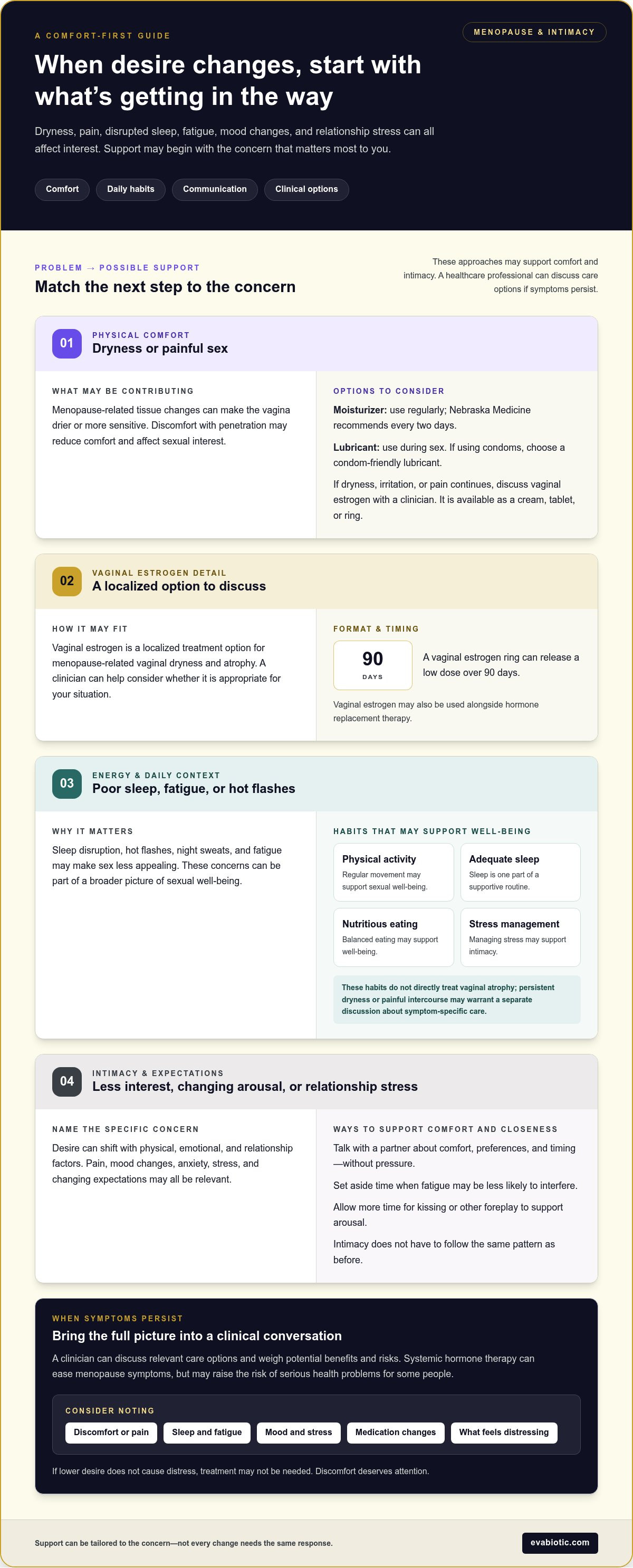
Improving libido during menopause often starts with identifying what is getting in the way, rather than trying to force desire. Vaginal dryness or pain, hot flashes, night sweats, poor sleep, fatigue, mood changes, and relationship stress can all affect interest in sex. To understand how to improve libido during menopause, consider these factors together: symptom relief, supportive daily habits, and open communication may help. A healthcare professional can discuss medical options if symptoms persist.
A change in desire can feel confusing, especially when it affects intimacy, but it doesn’t mean anything is wrong with you. If low libido bothers you, this article explains why it can happen during and after menopause, how vaginal symptoms and disrupted sleep may contribute, and which approaches may support comfort and intimacy. You’ll also learn how conversations with a partner and a review of your symptoms can help clarify what kind of care may be useful.
Key Takeaways
- Menopause-related changes in desire can have physical, emotional, and relationship-related contributors. Identifying what has changed can help focus the next steps.
- Vaginal dryness and pain may affect intimacy; treatment options range from moisturizers and lubricants to clinician-recommended medical care.
- Prepare to discuss changes in desire, discomfort, sleep, mood, and medications with a clinician to help identify relevant care options.
- Open conversations with a partner about comfort, preferences, and timing can support intimacy without pressure.
- Sleep disruption, fatigue, hot flashes, and bladder symptoms may make sex less appealing; addressing these concerns can be part of a broader approach to sexual well-being.
What kind of treatments are available for people during perimenopause and after menopause to improve their sex lives?
Menopause is reached after 12 months have passed since a person’s last menstrual period, according to the National Institute on Aging. Treatment options include vaginal moisturizers, lubricants, and, when appropriate, vaginal estrogen.
What lifestyle changes can improve libido during menopause? Regular physical activity, adequate sleep, nutritious eating, and stress management may support sexual well-being and intimacy.
Vaginal Estrogen for Dryness and Atrophy
Vaginal estrogen is a localized treatment for menopause-related vaginal dryness and atrophy. As estrogen levels decline, vaginal tissues can become thinner, drier, and more sensitive. This can make penetration painful and reduce comfort, which may also affect sexual interest.
Vaginal moisturizers and lubricants are nonprescription options for dryness and discomfort. Use a moisturizer regularly and lubricant during sex; Nebraska Medicine recommends applying vaginal moisturizers every two days. If you use condoms, choose a condom-friendly lubricant to avoid compromising the barrier.
Regular vaginal moisturizers and lubricants may ease genitourinary symptoms. The Mayo Clinic says they might work about as well as estrogen therapy for some symptoms. If dryness, irritation, or painful sex continues, vaginal estrogen is another option to discuss. It’s available as a cream, tablet, or ring.
A vaginal estrogen ring can release a low dose over 90 days. Vaginal estrogen may also be used alongside hormone replacement therapy. Systemic hormone therapy can ease menopause symptoms, but it may raise the risk of serious health problems for some people. A clinician weighs the potential benefits and risks when discussing treatment.
Lifestyle Changes and Libido
Everyday habits may support sexual well-being during menopause. Regular physical activity, enough sleep, balanced eating, and stress management can support sexuality and intimacy. These habits don’t directly treat vaginal atrophy, so persistent dryness or painful intercourse may warrant a separate discussion about symptom-specific care.
Practical adjustments can make intimacy more comfortable. Set aside time when fatigue is less likely to interfere, and allow more time for kissing or other foreplay to support arousal. If dryness is a concern, use lubricant during sex; with condoms, choose a condom-friendly product. Low sex drive that causes no distress doesn’t require treatment, but discomfort deserves attention.
Why Has My Sex Drive Gone After Menopause?
Sexual desire can change during perimenopause and after menopause as hormonal, physical, emotional, and relationship factors shift. Identifying which changes affect you can help clarify what support or treatments may be relevant.
Hormone Changes and Sexual Desire
Hormonal changes involve declining estrogen and testosterone levels, which can influence sexual desire and physical comfort. That matters because low interest may have more than one contributor, rather than a single cause.
In the United States, 38% of women report struggling with low sexual desire. One study found low libido in around one in ten perimenopausal women and about 3 in 100 menopausal women. These findings describe different study groups, not a prediction for any individual.
Emotional changes can add another layer. Anxiety, depression, high stress, or distress about changing body responses can affect desire and how you feel about sex. Consider when the change began, what else changed, and whether it causes distress. These details can help frame a useful conversation about how to improve libido during menopause.
Changes in Arousal, Orgasm, and Pain
Arousal and orgasm may change as menopause affects genital tissues and blood flow. Reduced blood flow can make arousal and orgasm more difficult, while vaginal dryness or sensitivity can make intercourse painful.
After menopause, reaching orgasm can take longer and may require more direct, intense clitoral stimulation. This can change what feels pleasurable, how long intimacy takes, and whether familiar routines still work. Intimacy doesn’t have to follow the same pattern as before.
Pain can also reduce desire over time: anticipating discomfort may make sex less appealing. Notice whether pain occurs with penetration, dryness, or other activities, and describe the pattern during a clinical discussion. Addressing the source of discomfort is different from trying to increase sex drive with desire-focused treatments alone.
Shifting Expectations and Intimacy
Allowing intimacy and sexual desire to take a different form during menopause and aging can help reset expectations. Lower desire is not automatically a problem; if you feel comfortable with it, you don’t need treatment.
Relationship expectations can influence whether a change feels troubling. Partners may have different levels of interest, or one person may miss spontaneous desire while still valuing closeness. Naming the specific concern, such as pain, less interest, or difficulty reaching orgasm, can clarify the issue better than treating every change as a loss of intimacy.
By age 65, three out of four women report little to no sexual desire. That figure doesn’t define an individual’s relationship or preferences. If the change causes sadness or anxiety, describing its effect on daily life and intimacy can help guide a discussion about possible support.
For broader menopause support alongside conversations about sexual changes, Menopause Relief Multivitamins (60 Capsules) are a menopause-focused multivitamin, not a targeted treatment for sexual desire.
How do menopause and aging affect sexuality?
Sexual well-being can shift through perimenopause and aging, influenced by symptoms, health, medication, and stress. Preparing clear examples for a clinical conversation can help identify factors that may affect sexual function.
Perimenopause can begin 8 to 10 years before a person’s final menstrual period. During this transition, changes in cycle predictability and other symptoms may coincide with changes in sexual comfort or interest. More than a third of women in perimenopause or menopause report sexual difficulties. That broad pattern includes different concerns, so describing your own experience matters more than comparing it with a single average.
Aging doesn’t automatically end sexual activity. Half of women in their 50s report continued sexual activity, compared with 27% of women in their 70s. These figures reflect different age groups, not a fixed timetable. Desire, health, relationships, comfort, and opportunity can all shape an individual’s experience.
Preparing to Discuss Sexual Concerns
Before an appointment, write down the change you’ve noticed and when it began. Include examples such as less interest, discomfort with penetration, difficulty becoming aroused, or a change in orgasm. Note whether the concern varies with stress, sleep, mood, or relationship circumstances. This timeline can help distinguish a change in desire from a specific physical symptom.
Bring a current list of medications and supplements. Some antidepressants, including SSRIs, can reduce sexual interest or make arousal and orgasm more difficult. If you suspect a medicine is affecting libido, don’t stop taking it on your own. Ask about a medication review and possible options for managing the mental health condition while addressing sexual side effects.
A gynecologist, urogynecologist, or pelvic floor physical therapist may be relevant for vaginal discomfort or pelvic symptoms. Describe which activities bring on discomfort and what makes it better. Mention mood symptoms or persistent stress too, since anxiety and depression can affect sexual interest. Specific details make the discussion more useful than simply saying sex feels different.
Clitoral Stimulation and Sexual Tools
Clitoral stimulation means direct or indirect touch intended to increase pleasurable sensation. If arousal feels different, explore pressure, pace, or location with a partner or by yourself. A vibrator can also be used on areas such as the inner arms, thighs, or sides of the breasts, allowing gradual exploration beyond genital stimulation.
Let comfort guide you, and stop if an activity causes pain. A sex therapist can offer sexual-response education and techniques; a pelvic floor physical therapist may help with pain or muscle concerns. These options address different needs, so describe the specific symptom you want help with.
Communication with a partner
Menopause can change desire, comfort, and the pace of arousal, so partners may need to revisit familiar expectations. Start the conversation outside the bedroom, when neither person feels pressured to continue intercourse. Describe one specific change, such as needing more time to feel aroused or preferring intimacy without penetration. Clear examples give both partners something practical to discuss.
Use direct, personal language rather than blame. For example: “I want to feel close, but intercourse has been uncomfortable,” or “I’d like more time to explore what feels pleasurable.” Then invite your partner to share their perspective. The Mayo Clinic includes open communication with a partner among self-care approaches that may support libido, alongside exercise and stress management.
Talk about what feels good now, not only what has changed. You might identify preferred touch, pressure, timing, or forms of affection. More time for foreplay, including kissing, can support arousal and receptivity. If dryness or pain makes penetration difficult, say so plainly and agree that stopping or changing activities is acceptable. Intimacy doesn’t have to depend on intercourse.
Scheduling time together can reduce the pressure to wait for spontaneous desire. Choose a time when both partners have energy, and treat the plan as space for connection, not a commitment to sex. You could begin with cuddling, conversation, or a massage, then decide together what feels welcome. This puts pleasure and consent ahead of completing a particular activity.
Some couples find that menopause-related changes bring up body image concerns, past trauma, or communication difficulties. Sex therapy offers a structured space to explore those barriers, understand emotions around sex, and practice communicating needs. A provider may recommend it when conversations at home feel stuck. Couples counseling can also address relationship concerns that contribute to reduced desire or strained intimacy.
Keep the conversation ongoing. After an intimate moment, share one thing that felt comfortable and one adjustment you’d like next time. Avoid treating sex as an obligation: sex driven by pressure is unlikely to satisfy either partner. If one person wants more closeness and the other needs time, discuss alternatives together, such as affectionate touch or planned time without expectations.
Communication isn’t a substitute for care when pain or other symptoms persist. Tell your partner what support would help, then raise ongoing discomfort or distress with a healthcare professional. A shared understanding can make that next conversation more specific, whether the issue involves arousal, painful intercourse, emotional stress, or differing expectations about intimacy.
Hot flashes, night sweats, insomnia, fatigue, and bladder issues
Stress, disrupted sleep, mood changes, and relationship strain can each affect libido during menopause. Night sweats can interrupt rest, while anxiety or depression can reduce interest. Ongoing tension with a partner can also make intimacy feel less appealing.
Hot flashes and night sweats can affect sexual desire by disrupting comfort, sleep, and energy. After a poor night, physical fatigue may make sex feel less inviting, even when closeness remains important. Notice whether desire shifts after nights with repeated waking or on days when hot flashes are more disruptive. This pattern can help identify which symptoms deserve attention first.
Sleep is one practical part of the picture. A study found that one extra hour of sleep was associated with a 14% increase in the odds of engaging in sexual activity with a partner. Women should aim for at least 7 hours of sleep per night as a preventive strategy for maintaining libido. A steady bedtime routine and addressing night sweats may help protect time for rest.
Bladder symptoms can also interrupt intimacy. Over a third of women in one study experienced urinary incontinence during perimenopause. Worry about leakage may distract from pleasure or lead someone to avoid intercourse. Emptying the bladder before and after sex, or changing sexual positions, may help with urination during intercourse. Raise persistent bladder control concerns during a healthcare appointment.
Vaginal dryness can make sex uncomfortable, particularly when tissue changes cause irritation or painful penetration. Discomfort may reduce desire by making intimacy feel associated with pain. Lubricants during sex and regular vaginal moisturizers are options for dryness; if you use condoms, choose a condom-friendly lubricant. Discuss ongoing pain or irritation with a healthcare professional.
Stress and mood deserve attention alongside physical symptoms. Anxiety, depression, and high stress during or after menopause can affect sex drive. Relationship factors matter too: unresolved conflict, pressure to have sex, or different expectations about intimacy can shape desire. Open communication can help partners discuss comfort and closeness without treating intercourse as an obligation.
Consider tracking sleep, hot flashes, fatigue, bladder symptoms, dryness, and mood together. Bring those observations, plus a current medication list, to a clinician; some medications, including antidepressants, can affect sexual interest or response. For a daily menopause-focused supplement option, explore menopause relief multivitamins.
Evabiotic: Menopause Relief Multivitamins (60 Capsules)
Evabiotic’s Menopause Relief Multivitamins (60 Capsules) may support women through the various stages of menopause. The product is a daily multivitamin with natural ingredients, offering a supplement option as part of broader menopause care. It isn’t a targeted treatment for low libido, vaginal dryness, or painful sex, so persistent symptoms still call for appropriate clinical care.
Choose individual purchase or a subscription for recurring delivery. A supplement may fit your routine if you’re looking for general menopause support alongside conversations about sleep, mood, and sexual well-being. Consider how it fits with your current supplements and medications as part of your overall care.
Visit evabiotic.com to learn more about the multivitamin.
Set a Personal Direction for Intimacy
Progress doesn’t have to mean returning to an earlier version of your sex life. If you’re considering how to improve libido during menopause, first decide what would feel meaningful now: more comfort, greater closeness, less pressure, or a better understanding of your body. A personal goal can guide conversations with a partner and help you decide which concerns to raise with a healthcare professional.
Give yourself room to reassess. Desire and intimacy don’t need to follow a fixed schedule, and your priorities may shift over time. Choose an approach that respects your comfort and values, rather than measuring success against someone else’s expectations.
If a menopause-focused supplement is part of your broader wellness routine, explore Evabiotic’s menopause multivitamin for product details. It isn’t a targeted treatment for low libido or painful sex, so keep symptom-specific care separate. Your next step can be thoughtful and personal, and small, informed choices can help you move forward with confidence.
Frequently Asked Questions
How can hormone therapy affect sex during perimenopause?
Hormone therapy can ease some menopause symptoms that interfere with sexual comfort, including vaginal dryness and painful intercourse. When symptoms improve, sexual function may feel easier for some people, though treatment effects differ. The decision depends on which symptoms need attention and personal health risks. Menopausal hormone therapy can increase the risk of serious health problems for some people, so weigh potential benefits and risks carefully with a healthcare professional.
How do I talk to my partner(s) about sex during the perimenopausal stage and after menopause?
Choose a calm moment outside sexual activity and describe one specific concern or preference. For example, you might say, “I want closeness, but I need us to pause if something hurts.” Ask what helps your partner feel connected, too. Agree on a simple signal for stopping or changing activities, and revisit the conversation later. This makes consent and comfort explicit without requiring either person to promise sex.
What is perimenopause?
Perimenopause is the transition leading up to menopause, when menstrual patterns and other symptoms can change. It can begin 8-10 years before a person’s final menstrual period. Menopause itself is reached after 12 months have passed since the last menstrual period, according to the National Institute on Aging. During perimenopause, cycle changes can occur alongside shifts in sleep, mood, or sexual comfort.
Why is my libido so low?
Low libido can reflect several overlapping factors rather than one isolated cause. Consider whether your desire changed alongside pain, vaginal dryness, sleep disruption, anxiety, depression, stress, relationship changes, or a new medication. Note when the change began and whether it affects you emotionally or in daily life. Low desire that doesn’t cause distress does not automatically need treatment; your comfort and priorities matter.
Why might perimenopause impact my sex drive?
Perimenopause can bring hormonal shifts and symptoms that influence desire, comfort, and emotional well-being. For example, night sweats may disrupt sleep, while stress or mood changes can make sexual interest less accessible. Cycle changes may also coincide with changing expectations about intimacy. Track which symptoms occur together and how they affect your interest. This pattern can help distinguish a temporary change from a concern worth discussing further.
What causes low libido during perimenopause and menopause?
Possible contributors include changing estrogen and testosterone levels, discomfort during sex, reduced blood flow, mood symptoms, stress, relationship concerns, and certain medications. These factors can interact: pain may lead someone to avoid intimacy, while poor sleep can reduce energy and interest. Consider the full context rather than assuming one hormone explains everything. A medication review may be useful if reduced desire began after starting or changing a prescription.
How do estrogen and testosterone changes affect sexual desire?
Lower estrogen can contribute to vaginal tissue changes, dryness, and discomfort, which may make sexual activity less appealing. Changes in testosterone can also be associated with shifts in desire. Hormones are only part of the picture: sleep, mood, physical comfort, and relationship context can also shape interest. Noticing whether desire changes alongside specific symptoms can help you describe the experience more precisely.
Can vaginal estrogen or hormone therapy improve sex drive, and what are the risks?
Vaginal estrogen can improve moisture and lubrication, potentially making sex more comfortable; improved comfort may support interest, but it isn’t a direct libido treatment. The Mayo Clinic says small-dose vaginal estrogen is unlikely to raise breast cancer risk. Systemic hormone therapy carries different considerations: estrogen-only therapy can increase endometrial cancer risk, while adding progestin can reduce that risk. Combined and estrogen-only therapy each carry a slight increase in breast cancer risk.
Disclaimer
*These statements have not been evaluated by the Food and Drug Administration. This product is not intended to diagnose, treat, cure or prevent any disease. The views and nutritional advice expressed by AlphaHealth+ Nutrition are not intended for the purpose of providing medical advice. Please always consult your health care provider if you are taking any medications or have any medical conditions. Individual results may vary.