

Natural Menopause Relief vs. HRT: A Clinical Comparison of Hormonal and Systemic Strategies
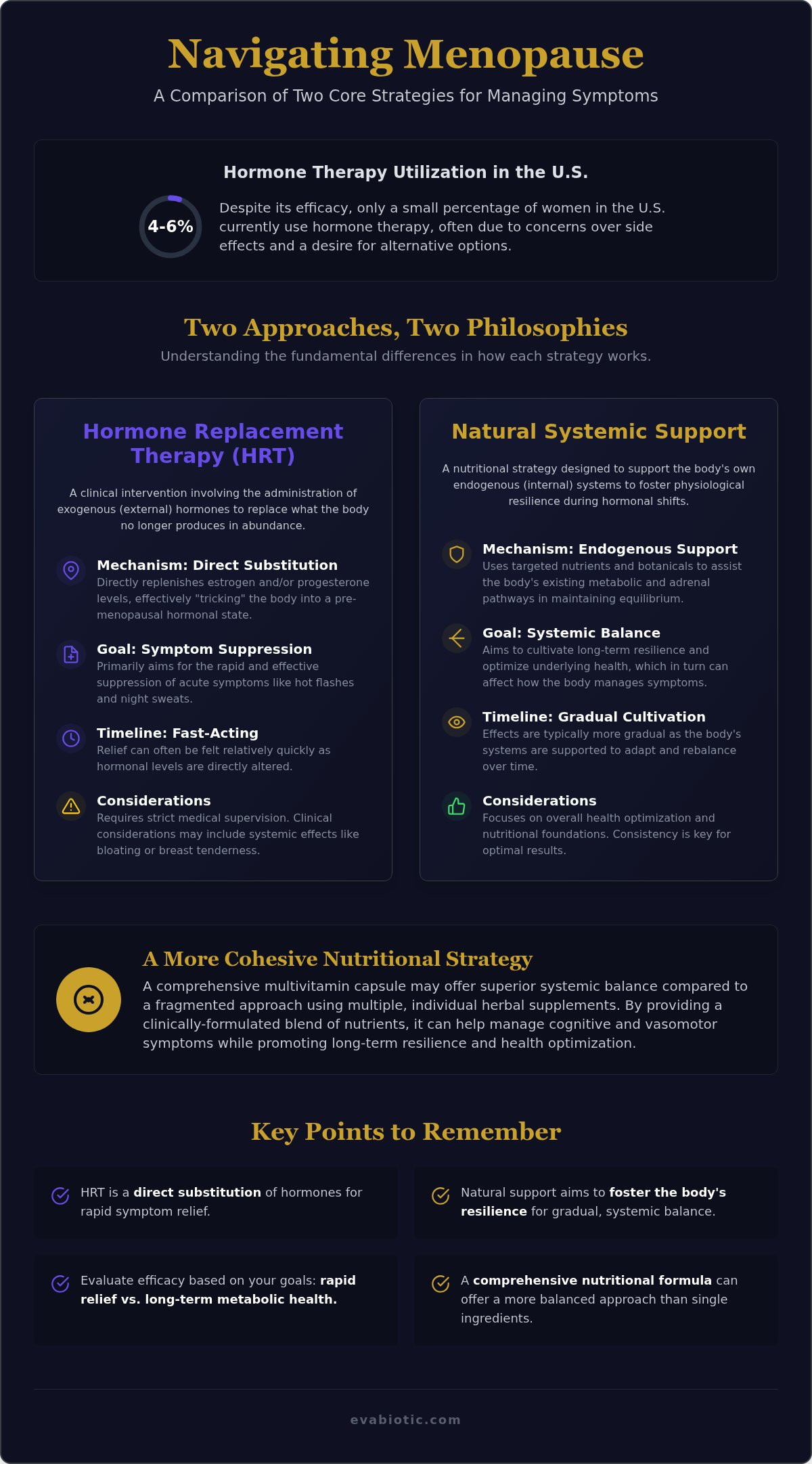
Did you know that despite the proven efficacy of hormone therapy, only about 4% to 6% of women in the United States are currently utilizing it? This gap often stems from a deep-seated anxiety over potential side effects and a lack of clarity regarding the quality of alternative options. When you are managing persistent hot flashes or the cognitive fog of menopause, the decision between natural menopause relief vs hrt can feel like an overwhelming choice between clinical intervention and unverified supplements. You deserve a strategy that prioritizes systemic balance without compromising your long-term health goals.
We understand that you're looking for more than just a temporary fix for night sweats; you're seeking a way to restore your physiological resilience. This article provides a comprehensive, science-backed analysis comparing the specific mechanisms of hormone replacement therapy with targeted nutritional support. We'll examine how hormonal substitution works in the body and how certain botanical interventions, such as Ashwagandha, may affect your systemic equilibrium. By the end of this guide, you'll have a clear understanding of the trade-offs involved and the evidence behind non-hormonal strategies that can help optimize your transition through menopause.
Key Takeaways
- Understand the fundamental distinction between direct exogenous hormone substitution and supporting your body's endogenous physiological resilience through systemic nutritional strategies.
- Compare the varying timelines of efficacy when evaluating natural menopause relief vs hrt, specifically examining the difference between rapid symptom suppression and the gradual cultivation of metabolic balance.
- Examine the modern safety profiles of various interventions, including the potential for rebound effects and common clinical considerations like breast tenderness or systemic bloating.
- Learn why a comprehensive multivitamin capsule may offer superior systemic balance compared to the fragmented approach of utilizing multiple individual herbal supplements.
- Discover how consistent, clinical-grade nutritional support can help manage cognitive and vasomotor symptoms while promoting long-term resilience and health optimization.
Navigating the Menopausal Transition: Hormonal Replacement vs. Natural Systemic Support
The transition into menopause represents a significant shift in female physiology, characterized by the gradual decline of ovarian activity. This Menopause overview highlights that the resulting reduction in estrogen can affect multiple biological systems, including bone density, cardiovascular health, and cognitive function. For many women, the fundamental choice between natural menopause relief vs hrt centers on whether to replace these hormones directly or to optimize the body's existing metabolic pathways. Both strategies are valid clinical options, yet they operate through distinct mechanisms to address the same physiological shifts.
The core dilemma for most individuals involves a trade-off between the immediate suppression of symptoms and the pursuit of long-term systemic balance. While one path offers a fast-acting intervention for acute discomfort, the other focuses on cultivating resilience through nutritional support. Deciding which route to take depends heavily on an individual's health history, risk profile, and personal wellness philosophy.
The Shift Toward Natural Physiological Support
Clinical interest in non-hormonal interventions has increased as more women seek alternatives that align with their long-term health goals. Natural menopause relief is defined as a systemic nutritional strategy designed to support endogenous physiological resilience. Instead of introducing exogenous hormones, this approach utilizes high-quality nutrients and botanicals to assist the body in maintaining equilibrium during hormonal fluctuations. For instance, targeted nutritional optimization can affect how the hypothalamus manages vasomotor shifts, potentially leading to fewer hot flashes. By focusing on menopause health optimization, women can support their vitality through a strategy that prioritizes metabolic stability. This method is often preferred by those with contraindications to hormone therapy or those who favor a gradual, supportive approach to systemic health.
HRT: The Conventional Medical Approach
Hormone Replacement Therapy (HRT) remains the conventional medical standard for managing acute symptoms. It involves the administration of synthetic or bioidentical estrogen, sometimes combined with progesterone, to substitute for the hormones the ovaries no longer produce in abundance. This direct substitution strategy is effective because it "tricks" the body into a pre-menopausal state, which can lead to the rapid suppression of night sweats and hot flashes. However, HRT is typically used under strict medical supervision due to its potent influence on the body's endocrine system. While highly effective at symptom management, HRT may not address broader nutritional gaps that emerge during this transition. When comparing natural menopause relief vs hrt, it's essential to recognize that while HRT provides rapid relief, it doesn't necessarily optimize the body's underlying nutritional resilience.
The Biological Mechanisms: Direct Hormone Substitution vs. Physiological Resilience
Comparing natural menopause relief vs hrt requires an understanding of two fundamentally different biological philosophies. HRT operates as a direct exogenous intervention. It introduces hormones from outside the body to compensate for the decline in ovarian production. In contrast, natural strategies focus on supporting the body's existing metabolic and adrenal pathways. This approach seeks to foster physiological resilience rather than relying on external substitution. By addressing the system as a whole, nutritional strategies, such as those offered by Coretribe, can provide a different type of stability during the menopausal transition.
Hormonal Replacement: A Targeted Intervention
Hormone Replacement Therapy functions by replacing declining levels of estrogen and progesterone to effectively "trick" the body into a pre-menopausal state. This mechanism has a direct impact on estrogen receptors located in the brain, bones, and cardiovascular system. For women who still have a uterus, medical professionals typically prescribe a combination of estrogen and progestogens to protect the uterine lining from thickening. While this targeted intervention is highly potent, it requires precise medical monitoring to manage the systemic load. Different Menopause treatment options carry varying levels of receptor-site activity, which is why a clinical assessment is necessary before beginning any hormonal protocol.
Nutritional Resilience: Supporting the System from Within
Rather than introducing outside hormones, natural systemic support aims to optimize the body's internal regulation. This often involves the use of adaptogens to manage the stress response. For instance, ashwagandha for menopause may support the HPA axis (hypothalamic-pituitary-adrenal), which can affect how the body responds to shifting estrogen levels. When the adrenal system is supported, it may more effectively handle the transition as the primary site of post-menopausal hormone production. Specific nutrients provide the raw materials needed for this internal balance:
- B-Complex Vitamins: These can affect neurological health and energy metabolism, supporting cognitive clarity.
- Essential Minerals: Magnesium and Zinc are vital for bone density and metabolic stability.
- Botanical Compounds: These may modulate vasomotor responses naturally by supporting the autonomic nervous system.
Utilizing menopause relief multivitamins can provide a structured foundation for metabolic health, ensuring that the body has the systemic balance required to navigate this transition. This strategy prioritizes long-term stability over the rapid suppression of individual symptoms. It offers a sustainable choice for many women evaluating natural menopause relief vs hrt who prefer to support their body's inherent physiological pathways.
Evaluating the Spectrum of Efficacy: Vasomotor Symptoms and Long-term Health
The efficacy of any intervention is often measured by the speed and sustainability of its results. When analyzing natural menopause relief vs hrt, the most visible difference lies in the response timeline. HRT often provides a rapid suppression of vasomotor symptoms, frequently within days or weeks of initiation. This occurs because the therapy directly replaces the missing estrogen that triggers the body's cooling response. However, this immediate effect can sometimes lead to a "rebound effect" if the therapy is discontinued, where symptoms return with significant intensity as the exogenous hormone levels drop.
In contrast, natural nutritional strategies rely on a gradual build-up of systemic support. These interventions aim to foster a steady state of physiological balance by providing the body with specific precursors and metabolic support. While the onset of relief may be slower, the support is integrated into the body's own pathways. This can lead to a more consistent experience over the long term without the sharp fluctuations sometimes associated with hormonal withdrawal. Choosing between these paths involves weighing the need for immediate suppression against the desire for a steady, foundational approach.
Managing Hot Flashes and Night Sweats
Clinical data on standardized botanical extracts suggest that certain nutrients can support the body’s temperature regulation mechanisms. While HRT remains a highly effective standard for symptom severity, natural remedies for hot flashes may offer a meaningful reduction in the frequency of these episodes. For example, specific compounds may affect the sensitivity of the hypothalamus to thermal changes. Utilizing clinical-grade support can be a vital part of managing menopause symptoms without introducing exogenous hormones. This approach also extends to secondary concerns; for instance, certain vitamins can support digestive resilience to help manage menopause bloating, which is often exacerbated by hormonal shifts affecting the gut microbiome.
Cognitive and Emotional Stability
Neurological clarity is a primary concern for many women during this transition. Mood fluctuations and "brain fog" often result from the brain’s adaptation to lower estrogen levels. In the debate of natural menopause relief vs hrt, both strategies show potential for supporting cognitive function. HRT addresses this through direct receptor activation, while menopause brain fog supplements focus on providing the precursors for neurotransmitter synthesis and antioxidant protection. Systemic balance is essential for maintaining cognitive fortitude. Nutritional strategies can support neurological health by protecting neurons from oxidative stress and optimizing energy metabolism within brain cells. This ensures that cognitive stability is built on a foundation of metabolic health.
Safety Profiles and Considerations: Assessing Risks, Side Effects, and Regulatory Standards
Assessing the safety of menopausal interventions requires a nuanced examination of clinical data and individual health profiles. In the comparison of natural menopause relief vs hrt, the safety discussion has evolved significantly. Historically, concerns regarding cardiovascular health and oncological risks limited the use of hormone therapy. However, modern clinical perspectives have shifted. As of early 2026, regulatory bodies like the FDA have initiated the removal of specific boxed warnings for certain systemic estrogen formulations, reflecting a more favorable risk-benefit ratio for women under age 60 or those within ten years of menopause onset. Despite these updates, HRT remains a potent intervention that can cause common side effects such as breast tenderness, systemic bloating, and irregular bleeding.
Because HRT introduces exogenous hormones into the endocrine system, it requires precise medical monitoring. It remains contraindicated for women with a history of certain cancers, unexplained vaginal bleeding, or high risk for blood clots. These physiological shifts can also influence metabolic pathways, potentially leading to hormonal weight gain during menopause. For many, the decision to pursue hormonal therapy is a balance between the need for acute symptom suppression and the potential for systemic side effects.
The HRT Risk-Benefit Analysis
A medical consultation is mandatory before beginning any hormonal protocol to ensure the strategy aligns with your cardiovascular and metabolic history. While modern HRT is considered a safe and effective option for many, it's not a universal solution. The potential for weight shifts and mood fluctuations means that even bioidentical options require careful titration. For women who cannot or choose not to use hormones, the focus shifts toward supporting the body's internal regulatory systems without the risk of exogenous disruption. This emphasis on internal balance is also a key focus in the field of metabolic research, where ReadyPep provides high-quality tools for investigating physiological systems.
The safety of natural interventions depends heavily on the quality and format of the ingredients used. Many consumer wellness products utilize gummy or liquid formats, which may contain excessive sugars or unstable botanical extracts that degrade quickly. Choosing a clinical-grade, 60-capsule multivitamin format ensures precise dosing and ingredient stability. This format allows for the inclusion of standardized botanicals and minerals that can support health without the systemic disruption sometimes associated with exogenous hormones.
Transparency is equally vital for long-term safety. Selecting products made in the USA ensures that manufacturing processes meet rigorous regulatory standards for purity and potency. This level of oversight is essential for maintaining systemic balance and metabolic resilience. If you are seeking a supportive strategy that prioritizes ingredient integrity, you can order our menopause relief multivitamins to establish a foundation of science-backed nutritional support.
Implementing a Targeted Nutritional Strategy: Why Multivitamin Capsules May Offer Systemic Balance
Many individuals exploring natural menopause relief vs hrt find themselves overwhelmed by a fragmented approach, often attempting to manage symptoms by taking multiple individual herbal extracts. While single ingredients like black cohosh are frequently discussed in isolation, they often fail to address the interconnected nature of menopausal physiology. Menopause is not a localized event; it is a systemic shift that can affect bone density, cardiovascular health, and cognitive function simultaneously. A comprehensive multivitamin strategy provides a synergistic method to support metabolic resilience across all these systems, offering a more cohesive alternative to the scattered use of individual supplements.
The goal of this targeted strategy is to foster systemic balance. By providing the body with a broad spectrum of clinical-grade nutrients, women can support their physiological transition from multiple angles. This ensures that while vasomotor symptoms are addressed, the long-term health of the heart and skeletal system is not neglected. This holistic perspective is essential for those who seek to optimize their health during and after the menopausal transition.
The Evabiotic Difference: Precision and Quality
Evabiotic provides a high-quality Menopause Relief Multivitamin in a 60-capsule format, designed for women who prioritize scientific integrity and transparency. Unlike gummy or liquid formats, which often rely on excessive sugars and can suffer from ingredient instability, our clinical-grade capsules protect sensitive botanical interventions. This precise delivery method ensures that standardized extracts, such as Ashwagandha, remain potent and bioavailable. By avoiding unnecessary fillers and focusing on systemic resilience, this formula can support the body's natural transition more effectively than lower-quality alternatives. This approach is built on the belief that every detail of a supplement's composition can affect its overall efficacy and safety.
Consistency is Key for Physiological Support
Achieving systemic balance is a methodical process that requires time and steady application. When evaluating natural menopause relief vs hrt, it's important to recognize that nutritional support relies on maintaining a "steady state" of precursors and nutrients within the bloodstream. Consistency can affect long-term health outcomes by preventing gaps in support that might lead to a return of vasomotor or cognitive fluctuations. A monthly subscription model provides a practical framework for this daily discipline, ensuring that you never run out of the raw materials your body needs for metabolic stability. This steady rhythm reinforces the brand's message that health is a long-term investment requiring a thoughtful and systematic approach. You can Explore Evabiotic Menopause Relief Multivitamins to start your journey toward systemic balance and sustained physiological resilience.
Prioritizing Your Long-Term Metabolic Resilience
Choosing the right strategy for your menopausal transition requires a clear understanding of your personal health goals and risk profile. Whether you opt for direct hormonal substitution or a path focused on physiological resilience, the objective remains the same: a stable and healthy transition. The comparison of natural menopause relief vs hrt highlights that while HRT addresses acute symptoms through replacement, targeted nutritional support can affect your systemic balance by reinforcing the body's existing metabolic pathways.
Consistency is the most critical factor in achieving these long-term results. Utilizing high-quality, clinical-grade supplements ensures that your body receives a steady supply of essential nutrients without the fillers or sugars found in unstable formats. By focusing on a comprehensive approach, you can support your bone, heart, and brain health simultaneously. Establishing a reliable daily routine is the first step toward sustained vitality.
Optimize your systemic balance with Evabiotic Menopause Relief Multivitamins. Our clinical-grade 60-capsule formula is made in the USA and offers subscription savings to ensure you have consistent support. You have the power to navigate this transition with confidence and clarity.
Frequently Asked Questions
Is natural menopause relief as effective as HRT for hot flashes?
HRT is currently the most potent intervention for acute symptoms, but evaluating natural menopause relief vs hrt involves looking at different physiological goals. While HRT directly replaces hormones for rapid suppression, natural strategies focus on building endogenous resilience. Specific botanical extracts may affect the frequency of vasomotor events over time. This approach offers a way to support the body without the rapid fluctuations sometimes associated with exogenous hormone use.
Can I take natural menopause supplements while on HRT?
Integrating nutritional support with hormonal therapy is common, but it's essential to consult your physician before combining protocols. Certain vitamins and minerals can affect systemic health by addressing nutritional gaps that HRT doesn't cover. For example, magnesium and B-vitamins may support neurological clarity and metabolic stability. Ensuring your strategy is cohesive helps maintain overall physiological balance during this transition while you receive hormonal care.
What are the main risks associated with long-term HRT use?
Modern clinical guidelines emphasize that HRT is safe for many women, yet long-term use requires careful monitoring of cardiovascular and oncological risks. Potential side effects can include breast tenderness, bloating, and irregular bleeding. Some women also report metabolic shifts that may affect weight management. Because every health history is unique, a medical professional must assess whether the benefits of hormonal substitution outweigh these potential systemic considerations for your specific profile.
How long does it take for natural menopause vitamins to start working?
Nutritional interventions require a consistent daily routine to reach a physiological steady state. Most women find that it takes approximately 4 to 12 weeks of daily use to observe a shift in their systemic balance. This gradual onset occurs because the body is utilizing nutrients to support its own metabolic pathways. Maintaining a subscription model can affect long-term results by preventing gaps in this essential daily support during your transition.
Are bioidentical hormones considered "natural" relief?
Bioidentical hormones are technically a form of Hormone Replacement Therapy (HRT) because they provide exogenous substitution of estrogen or progesterone. While their molecular structure matches human hormones, they still function by replacing what the body is no longer producing. In the context of natural menopause relief vs hrt, "natural relief" typically refers to nutritional and botanical strategies that support the body's own resilience rather than substituting hormones directly from an outside source.
Why are capsules preferred over gummies for menopause support?
Clinical-grade capsules are the preferred format because they protect the integrity of sensitive botanical ingredients. Gummy and liquid formats often contain high levels of sugar and artificial additives that can compromise metabolic health. Capsules allow for precise, concentrated dosing of standardized extracts. This ensures that you receive a consistent amount of each nutrient, which is vital for maintaining systemic balance and long-term physiological resilience throughout your daily routine.
What should I look for in a high-quality menopause multivitamin?
A high-quality multivitamin should prioritize ingredient transparency and clinical-grade manufacturing standards. Essential features include:
- Manufacturing in the USA to ensure rigorous quality control.
- Standardized botanical extracts like Ashwagandha for HPA axis support.
- A comprehensive profile of B-vitamins and essential minerals.
- A capsule-based format that avoids unnecessary fillers or sugars.
These elements ensure the product provides meaningful support for your metabolic pathways and overall systemic stability.
Can natural supplements help with menopause-related weight gain?
While no supplement is a "magic fix" for weight shifts, targeted nutritional support can affect the metabolic factors that contribute to weight gain. Managing the stress response through adaptogens may affect how the body stores fat during hormonal transitions. Additionally, B-vitamins and minerals can support energy metabolism and digestive resilience. This systemic approach helps build a foundation for maintaining a healthy weight as your physiology undergoes significant changes.
Disclaimer
*These statements have not been evaluated by the Food and Drug Administration. This product is not intended to diagnose, treat, cure or prevent any disease. The views and nutritional advice expressed by AlphaHealth+ Nutrition are not intended for the purpose of providing medical advice. Please always consult your health care provider if you are taking any medications or have any medical conditions. Individual results may vary.