

Non-Hormonal Hot Flash Relief: Evidence, Options, and a Practical Plan
What if choosing non hormonal hot flash relief starts with weighing the evidence, rather than trying every remedy you encounter? Hot flashes can disrupt sleep, concentration, comfort, and daily routines. Online advice often places prescription treatments, behavioral approaches, and supplements side by side, even though their evidence and safety considerations can differ.
This guide explains the main non-hormonal options and how to compare them without treating limited evidence as proof. A menopause multivitamin may be part of a broader nutrition routine, but it isn’t automatically equivalent to a treatment studied specifically for hot flashes. We’ll review medical and behavioral approaches, explain where supplement evidence may be less certain, and offer practical questions to discuss with a healthcare professional. The goal is a realistic plan shaped around your symptoms, preferences, and health history.
Key Takeaways
- Non hormonal hot flash relief includes different approaches, and the evidence varies. Compare options by their intended role rather than treating them as interchangeable.
- Track when hot flashes occur, how intense they feel, and how they affect daily activities to identify patterns worth discussing.
- Review medicines and supplements with a healthcare professional before building a plan. Prepare questions about your symptoms and priorities.
- Behavioral approaches and clinical treatments have different evidence and considerations. A personalized discussion can help clarify what may suit your situation.
- A menopause multivitamin may fit into a broader nutrition routine, but it shouldn’t be assumed to provide proven hot-flash relief.
What Non-Hormonal Hot Flash Relief Means, and What It Can Address
Non-hormonal hot-flash relief refers to approaches that may help manage hot flashes without hormone therapy. It describes a range of options, not one treatment or a guarantee that symptoms will stop. Depending on the approach and individual circumstances, the aim may be to lessen disruption, build coping skills, or explore clinical support with a healthcare professional.
How menopause-related hot flashes may affect daily life
Hot flashes are commonly described as vasomotor symptoms, a term for changes involving blood vessel responses and body temperature regulation. An episode may involve a sudden feeling of warmth, flushing, or sweating, sometimes followed by chills. The Hot flashes overview describes these experiences and discusses several approaches to symptom management.
Episodes can interrupt sleep, concentration, or daily activities. Their frequency, intensity, and impact vary between people and may change over time. Not every episode of warmth or sweating has the same cause, so don’t assume a new or unusual symptom is menopause-related. Discuss symptoms that concern you, differ from your usual pattern, or interfere with daily life with a healthcare professional.
What non-hormonal relief includes
Non hormonal hot flash relief can involve several distinct categories. They have different purposes and levels of supporting evidence:
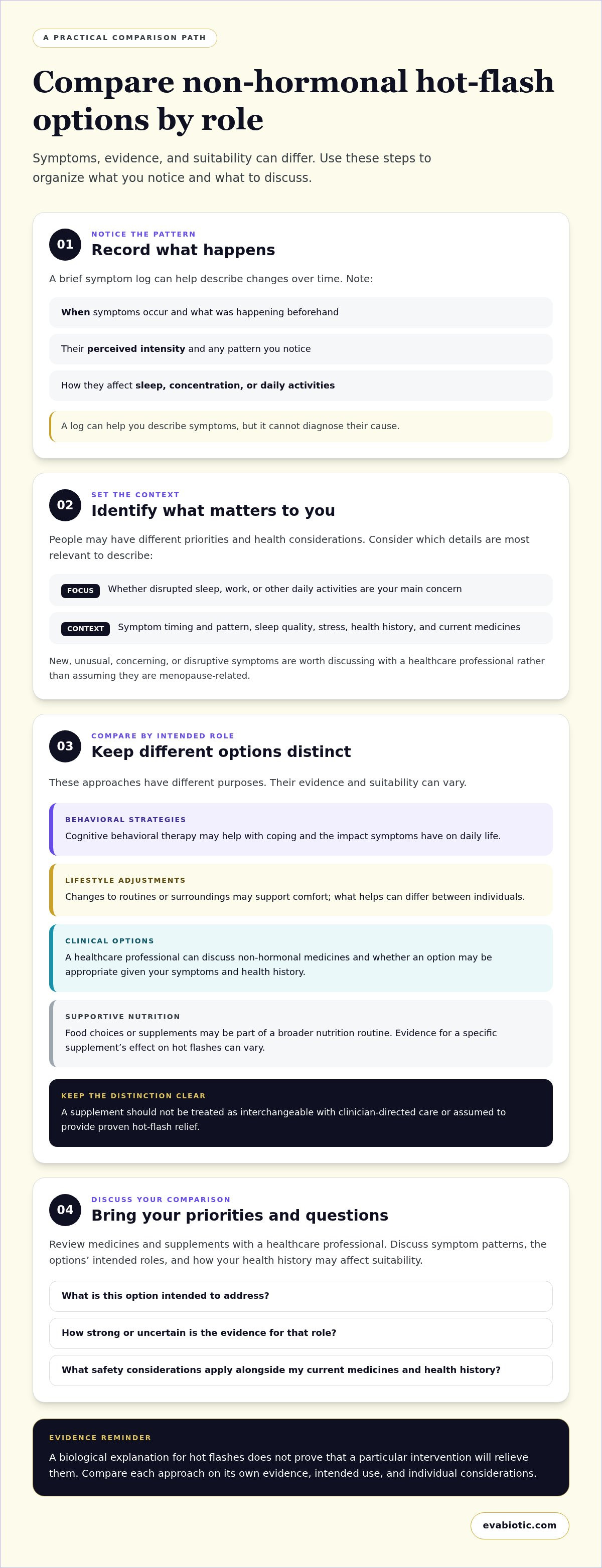
- Behavioral strategies: Approaches such as cognitive behavioral therapy may help with coping and the impact symptoms have on daily life.
- Lifestyle adjustments: Changes to routines or surroundings may support comfort, though what helps can differ between individuals.
- Clinical options: A healthcare professional can discuss non-hormonal medicines and whether a particular option may be appropriate in light of your symptoms and health history.
- Supportive nutrition: Food choices or supplements may form part of a broader nutrition routine, but evidence for a specific supplement’s effect on hot flashes can vary.
Evidence and suitability depend on the approach and a person’s health context. A supplement shouldn’t be treated as interchangeable with clinician-directed care. Its purpose, evidence, and safety considerations may differ. Keeping these categories separate makes it easier to compare options and identify useful questions for a healthcare professional.
Why Hot Flashes Happen and Why Relief Can Differ Between People
Menopause-related hot flashes are often linked to changes in estrogen, but the physiology is more complex than one hormone level. The brain’s temperature-regulating system, including the hypothalamus, helps keep body temperature within a comfortable range. As estrogen levels change, this system may become more sensitive to small shifts in temperature, potentially prompting responses such as sweating and increased blood flow to the skin. This is one proposed explanation, not a complete account of every person’s symptoms.
Estrogen changes and the body's temperature regulation
Temperature regulation involves signals between the brain and the body. If the range of temperatures perceived as comfortable narrows, an ordinary change in warmth may be more likely to trigger a cooling response. The experience can feel sudden, even though the underlying process involves several systems. This proposed mechanism may help explain why hot flashes occur, but it doesn’t establish that a particular treatment will work for everyone.
A plausible biological mechanism can help explain a symptom, but it doesn’t prove that a specific intervention will relieve it. That distinction matters when comparing treatments: approaches can have different evidence, intended uses, and considerations. An NIH-hosted review discusses evidence for several nonhormonal therapies, including medication options, but treatment choices still depend on individual circumstances.
Why an individualized approach matters
Two people can have similar symptoms but different priorities and health considerations. One may be most concerned about interrupted sleep; another may focus on episodes that disrupt work or other activities. Stress, sleep quality, health history, current medicines, and the timing or pattern of symptoms may all be relevant in a care discussion. These factors don’t mean symptoms are “all in your head.” They help frame a more useful assessment.
Track patterns rather than drawing conclusions from one episode. A brief log can note when symptoms occur, their perceived intensity, what was happening beforehand, and how they affected sleep or daily activities. This record can help you describe changes over time, but it can’t diagnose their cause. A healthcare professional can assess symptoms, consider other explanations where appropriate, and discuss options in light of your preferences and medical history.
Nutrition may be part of a broader personal routine, but it shouldn’t replace assessment or clinician-directed care. If you’re considering a supplement as one element of that routine, review Evabiotic’s menopause relief multivitamins while keeping their role distinct from treatments specifically evaluated for hot flashes.
Comparing Non-Hormonal Hot Flash Relief: Behavioral, Clinical, and Supplement Options
Non hormonal hot flash relief includes options with different goals and levels of evidence. Behavioral approaches may focus on coping and symptom impact, while prescription medicines are clinical treatments that require individualized assessment. Supplements and general nutrition support are separate categories. Don’t assume they have the same evidence as interventions studied specifically for hot flashes.
| Approach | Intended role | Evidence caveat | Is clinical guidance appropriate? |
|---|---|---|---|
| Cognitive behavioral therapy (CBT) | May support coping with symptoms and their effects on daily life. | Recognized in menopause guidance as an evidence-based behavioral approach, but it isn’t a medication and may not reduce episodes for everyone. | Discuss whether it fits your needs and access to care. |
| Lifestyle adjustments | May help you respond to personal patterns or improve comfort. | Triggers and helpful changes differ. A particular food, cooling method, or routine can’t be assumed to prevent hot flashes. | Useful if symptoms are disruptive or you’re unsure what may be contributing. |
| Prescription options | Clinician-directed treatment intended to address vasomotor symptoms. | Options can include certain SSRIs or SNRIs, gabapentin, and medicines that target neurokinin pathways. Benefits and risks differ by medicine and person. | Yes. A healthcare professional can consider symptoms, medical history, and current medicines. |
| Supplements and nutrition | May form part of a broader nutrition routine. | Ingredients and supporting evidence vary. A supplement shouldn’t be treated as proven hot-flash relief or as interchangeable with prescribed treatment. | Discuss supplements, especially if you take medicines or have health considerations. |
Behavioral and lifestyle approaches
CBT may help some people manage distress or disruption associated with hot flashes, even when the goal isn’t to eliminate episodes. Lifestyle adjustments are more individual. Noticing whether particular settings or routines coincide with symptoms can guide personal experiments, but a pattern doesn’t prove a cause. The National Institute on Aging summarizes non-hormonal hot flash relief options, including lifestyle measures and medicines. Treat personal adjustments as ways to explore comfort, not as guaranteed prevention.
Clinical options and the limits of supplements
Prescription choices are discussion topics, not self-treatment instructions. A clinician can explain which options may suit your circumstances and review relevant risks or interactions. Supplements vary in formulation and evidence, so a menopause multivitamin may be considered as part of a broader nutrition routine without assuming it treats hot flashes. For that distinct role, see Evabiotic’s menopause relief multivitamins.
How to Build a Practical, Safer Plan for Non-Hormonal Hot Flash Relief
A useful plan begins with clear observations, not assumptions. A simple symptom record can help you describe what’s happening and decide what you most want to address. You don’t need an app or special device. A notebook or phone note is enough.
Track symptoms and identify meaningful patterns
For each episode, jot down the time, perceived intensity, context, and any effect on sleep or daily activities. For example, note whether it happened during a meeting, disrupted sleep, or occurred alongside another symptom. Record what seems relevant, but don’t treat a coincidence as proof of a trigger. A symptom log can support a healthcare discussion, but it can’t diagnose the cause.
Use these steps to prepare a realistic discussion about non hormonal hot flash relief:
- Record patterns. Note episodes and their effects in a consistent, manageable way.
- Identify priorities. Decide what matters most to you, such as sleep, comfort, concentration, or disruption to daily routines.
- Review current products. List the prescription and over-the-counter medicines, vitamins, and supplements you use. Include product labels or ingredient lists if available.
- Prepare questions. Ask about relevant options, their possible benefits and limitations, potential risks, and alternatives.
Prepare for a healthcare conversation
Treatment choices should reflect your health history and personal preferences. Share relevant conditions, current medicines and supplements, and how symptoms have changed. This context may help a healthcare professional assess your concerns and discuss options suited to your circumstances. Don’t start, stop, or combine treatments based only on general information. Ask how a proposed change should be handled in your situation.
You might ask: “What could explain this pattern?” “What are the potential benefits and limitations of the options we’re discussing?” and “Could any of my current medicines or supplements affect the decision?” Bring your symptom notes, but remember they’re a conversation aid, not a diagnosis.
If symptoms persist, disrupt daily life, change noticeably, or concern you, arrange a discussion with a healthcare professional. The aim is to understand what may be contributing and consider appropriate next steps, not to assume the worst.
If you’re also considering a multivitamin as part of a broader nutrition routine, explore Evabiotic’s menopause relief multivitamins. Consider a supplement separately from treatments specifically evaluated for hot flashes.
Where a Menopause Multivitamin May Fit Alongside Hot Flash Care
A multivitamin may be one part of a broader nutrition routine, but its menopause focus alone doesn’t show that it reduces hot flashes. Keep those roles distinct: non hormonal hot flash relief may involve approaches evaluated specifically for vasomotor symptoms, while a supplement is a nutritional product whose ingredients and evidence need to be considered on their own terms.
How to assess a supplement's role realistically
Before adding a supplement, read its label and consider how it fits with your current routine. Review the listed ingredients, serving directions, and cautions. If you have questions, take medicines, or have relevant health considerations, discuss supplement use with a healthcare professional. This makes the conversation more specific without assuming a product is appropriate for everyone.
A product marketed for menopause may be intended for a broader life-stage or nutrition context. That positioning doesn’t establish that it prevents or relieves hot flashes. Evidence for supplements can vary by ingredient and intended use, and shouldn’t be treated as equivalent to evidence for clinician-directed options studied for vasomotor symptoms. Evabiotic’s Menopause Relief Multivitamins are a 60-capsule dietary supplement. They are not hormone replacement therapy and don’t replace individualized medical care.
Consider a consistent routine without expecting a quick fix
If you choose to use a multivitamin, consider it one element of an overall nutrition routine, not a stand-alone hot-flash treatment or a reason to delay care for disruptive symptoms. Any potential benefit should be understood in relation to the product’s documented information. Don’t assume a specific effect on hot flashes. A regular routine may make it easier to keep track of what you use, but consistency by itself doesn’t prove symptom benefit.
Evabiotic offers Menopause Relief Multivitamins for individual purchase or through a recurring subscription. Choose the purchase option that fits your preferences. A subscription isn’t a requirement for care. If hot flashes are affecting sleep or daily life, a healthcare professional can help assess suitable approaches alongside any nutrition choices you’re considering.
For product details, explore Evabiotic Menopause Relief Multivitamins and review the information provided as part of your broader decision.
Take Your Next Step With a Clearer Plan
Non hormonal hot flash relief isn’t one universal solution. Behavioral strategies, clinical options, lifestyle adjustments, and nutritional support have different purposes and evidence, so compare them carefully rather than treating them as interchangeable. A simple symptom record can help you explain what you’re experiencing and identify what matters most in a conversation with a healthcare professional.
That discussion can help you consider options in light of your health history, preferences, and current medicines. A menopause multivitamin may fit into a broader nutrition routine, but its menopause focus doesn’t establish it as a proven hot-flash treatment or a substitute for individualized care.
Evabiotic Menopause Relief Multivitamins are a 60-capsule dietary supplement, available for individual purchase or through a recurring subscription. To review the product as one possible part of your nutrition routine, explore Menopause Relief Multivitamins.
A thoughtful plan can begin with one small step: noticing your patterns and bringing your questions to a healthcare professional. You can make informed choices at a pace that feels right for you.
Frequently Asked Questions
What is the best non-hormonal treatment for hot flashes?
There isn’t one best option for everyone. Cognitive behavioral therapy may help with coping and symptom-related disruption, while a healthcare professional may discuss prescription options such as certain antidepressants or medicines that target temperature-regulation pathways. The evidence, potential benefits, and considerations differ by approach. Your symptom pattern, health history, preferences, and current medicines can help shape a discussion about which options may be appropriate.
Can hot flashes improve without hormone therapy?
Yes, hot flashes may become less frequent or disruptive over time without hormone therapy, although their pattern and duration vary. Some people explore behavioral strategies, personal comfort adjustments, or clinician-directed non-hormonal treatments. These approaches don’t guarantee that symptoms will stop. If episodes affect sleep or daily activities, a healthcare professional can help assess your symptoms and discuss options that fit your situation.
Do vitamins or supplements relieve hot flashes?
Some people consider supplements as part of a broader nutrition routine, but a menopause-related label doesn’t establish that a product reduces hot flashes. Ingredients and supporting evidence vary, and supplements shouldn’t be assumed to work like treatments studied specifically for vasomotor symptoms. Review the label and discuss supplement use with a healthcare professional, particularly if you take medicines or have health considerations that could affect what’s suitable.
How can I reduce hot flashes naturally without hormones?
Non hormonal hot flash relief may include behavioral support, such as cognitive behavioral therapy, along with practical adjustments guided by your own symptom patterns. Keep a simple log of episode timing, perceived intensity, context, and effects on sleep or daily life. Changes to routines or surroundings may support comfort, but no specific food or lifestyle measure can be assumed to prevent episodes reliably.
When should I talk to a doctor about hot flashes?
Consider speaking with a healthcare professional if hot flashes persist, disrupt sleep or daily activities, change noticeably, or concern you. A discussion can help assess the symptoms and consider whether other explanations or care options are relevant. Bring notes about when episodes occur, how they feel, and their impact, along with a list of medicines and supplements. A log can inform the conversation, but it can’t diagnose the cause.
Are non-hormonal hot flash treatments safe for everyone?
No single treatment is suitable for everyone. Prescription medicines and supplements can have different risks or considerations depending on a person’s health history, current medicines, and other factors. Behavioral approaches also vary in fit and accessibility. Discuss potential benefits, limitations, risks, and alternatives with a healthcare professional before making treatment changes. Don’t start, stop, or combine medicines based only on general information.
Can a menopause multivitamin replace treatment for hot flashes?
No. A menopause multivitamin is a dietary supplement and shouldn’t be treated as a replacement for individualized medical care or a treatment specifically evaluated for hot flashes. Evabiotic Menopause Relief Multivitamins come in a 60-capsule format and may fit into a broader nutrition routine, but their menopause focus doesn’t establish hot-flash relief. Review the product label and discuss supplement use with a healthcare professional if you have questions.
Disclaimer
*These statements have not been evaluated by the Food and Drug Administration. This product is not intended to diagnose, treat, cure or prevent any disease. The views and nutritional advice expressed by AlphaHealth+ Nutrition are not intended for the purpose of providing medical advice. Please always consult your health care provider if you are taking any medications or have any medical conditions. Individual results may vary.