

Supplements for Night Sweats: Evidence, Safety, and How to Choose
Before choosing supplements for night sweats, consider what may be causing them. Sweating during sleep has different possible causes, and an ingredient that may help with one person’s symptoms might not address another person’s.
Repeated wake-ups can leave you tired and affect how you function the next day. It’s understandable to look for a simple option, but online claims can make it hard to distinguish limited evidence from proven benefit. Menopause is one possible explanation, but it isn’t the only one. Persistent or concerning symptoms deserve clinical attention.
This article explains what selected supplements may and may not do, how to weigh the evidence, and what to consider for safety. You’ll learn how to track symptoms, what to check on a product label, and when to discuss symptoms or supplements with a healthcare professional. The goal is an informed next step, not a promise that a supplement will stop night sweats.
Key Takeaways
- Track when night sweats occur and consider possible causes before choosing a supplement. Menopause is one possibility, not an assumption.
- Assess evidence for supplements for night sweats without treating a plausible mechanism as proof of effectiveness.
- Compare the evidence, outcomes studied, uncertainties, and safety considerations for the supplement categories discussed here.
- Check serving size, ingredient amounts, warnings, and manufacturer information before using a product.
- Consider a menopause multivitamin in light of your needs and its current label, and seek individualized clinical guidance when appropriate.
What night sweats may signal, and when supplements are not the first step
Night sweats are episodes of sweating during sleep, not simply feeling warm in bed. They can range from damp skin to sweating that disrupts sleep or requires changing sleepwear or bedding. There’s no single practical threshold that identifies the cause. Night sweats describe an experience, not a diagnosis.
Menopause is one possible context. Changes during the menopausal transition may contribute to vasomotor symptoms, which can occur during the day or night. Bedroom temperature, bedding, medicines, infections, and other health conditions may also be relevant. The Night sweats overview describes this range of possible causes. It can help you frame questions, but it can’t determine the cause of an individual’s symptoms.
Consider possible causes before choosing supplements for night sweats. A product aimed at menopause-related symptoms may not address sweating linked to another factor. If episodes recur, note when they happen, how much they disrupt sleep, and whether there have been changes in your medicines or health. These details can make a clinical discussion more useful.
How are night sweats different from hot flashes?
Hot flashes are sudden sensations of heat, sometimes accompanied by flushing or sweating. These vasomotor symptoms can happen while someone is awake or during sleep. A nighttime episode may wake a person feeling hot and sweaty, with damp sleepwear or bedding, but experiences vary. For broader context on non-prescription approaches, see our guide to natural remedies for hot flashes.
When should recurring night sweats be discussed with a clinician?
Seek individualized clinical advice if night sweats are persistent, severe, new, or concerning, especially if they disrupt sleep or daily functioning. Other accompanying symptoms or a recent change in health or medication are also reasons to ask for an assessment. A clinician can consider the pattern and context rather than assuming menopause is the cause. Supplements shouldn’t replace evaluation or prescribed care.
Before trying supplements for night sweats, consider whether your symptoms have been assessed and whether a product’s intended use matches your circumstances. If symptoms are unexplained or changing, discussing them with a healthcare professional is a more informed first step than relying on an online ingredient claim.
Why menopause-related night sweats happen, and what supplements can realistically address
During perimenopause and menopause, changing estrogen levels may influence the body’s temperature regulation. This may help explain some night sweats, but it doesn’t establish the cause of every episode or show that a supplement will reduce symptoms. A biological rationale can guide research, but it isn’t proof of clinical benefit.
The hypothalamus, a brain region involved in regulating body temperature, helps coordinate responses that keep the body within a comfortable range. Hormonal changes may affect how this system responds to small temperature shifts. A resulting vasomotor response can involve a sudden feeling of heat, flushing, and sweating. The Office on Women’s Health outlines this connection in its guidance on menopause symptoms and relief.
A plausible mechanism can explain how a supplement might act, but only relevant clinical evidence can show whether it changes night-sweat symptoms. This distinction helps separate general nutritional support from evidence that a product reduces the frequency or severity of episodes. Supporting overall nutrient intake may be relevant to a person’s nutritional needs, but it doesn’t prove night-sweat relief.
How can hormonal changes affect temperature regulation?
The hypothalamus acts like a temperature-control center, coordinating responses such as changes in blood flow and sweating. If hormonal shifts affect its sensitivity, the body may react to temperature changes with a vasomotor episode. This mechanism may help explain menopause-related symptoms, but it doesn’t mean every nighttime episode is caused by estrogen changes or that everyone experiences symptoms in the same way.
What does supplement evidence need to show?
For supplements for night sweats, look for human clinical research that measures night sweats directly, such as changes in episode frequency or severity. Findings about sleep, general well-being, or another menopause symptom may be useful context, but they don’t establish an effect on night sweats. Early or small studies can suggest a possibility. Confidence grows when relevant findings are consistent across well-designed, replicated research.
Check whether the research studied the same ingredient, preparation, and amount as the product you’re considering. Results from one formulation can’t automatically be applied to another, and a proposed mechanism can’t fill gaps in the evidence. If you’re reviewing a menopause multivitamin, compare its current label with your needs and discuss questions with a healthcare professional. You can review the Menopause Relief Multivitamins product details.
Comparing supplements for night sweats: evidence, risks, and realistic expectations
Ingredient lists can make options seem more certain than the evidence supports. Research may examine hot flashes rather than night sweats, or sleep quality rather than sweating itself. These outcomes are related, but they aren’t interchangeable. The comparison below reflects the available research summary and notes where findings are preliminary, mixed, or indirect. It doesn’t establish that any ingredient will work for an individual.
| Supplement category | Evidence and studied outcome | Uncertainty | Safety considerations |
|---|---|---|---|
| Black cohosh and red clover | Some of the stronger evidence among the reviewed botanicals relates to vasomotor symptoms, including hot flashes and night sweats. | Findings for black cohosh are mixed, not definitive. Evidence for one botanical shouldn’t be assumed to apply to another. | Review the specific ingredient and product with a healthcare professional, particularly alongside medicines or existing health conditions. |
| Soy isoflavones | A meta-analysis reported reduced hot-flash frequency compared with placebo. | The reported outcome is hot-flash frequency. It doesn’t by itself establish a reduction in night sweats or their severity. | Individual health circumstances and other products being used may affect whether it’s appropriate. |
| Sage extract | Smaller studies have examined hot-flash frequency and severity. | Early findings are encouraging, but larger studies are needed. Night-sweat outcomes shouldn’t be inferred unless they were measured. | Check the formulation and relevant warnings with a qualified professional. |
| Magnesium | Often discussed in relation to sleep quality, which may matter after waking during the night. | Support for sleep isn’t evidence that magnesium prevents the sweating episode. | Suitability can depend on personal health and other medicines or supplements. |
| Vitamin E | May offer modest benefit for mild symptoms, according to the research summary. | The size and relevance of any effect on night sweats remain uncertain. | Review potential interactions and product details rather than assuming an ingredient is suitable for everyone. |
How to assess claims about botanical and nutritional ingredients
First check whether a study measured night-sweat frequency or severity directly. Then consider its design, participant group, duration, and limitations. A small or preliminary study can raise a question for further research, but it doesn’t establish a dependable effect. Be cautious with claims based on a different menopause symptom, a proposed mechanism, or an ingredient that differs from the product being sold.
Who should review supplement safety with a clinician?
Depending on the ingredients and your circumstances, supplements may have side effects or interact with medicines. Ask a qualified healthcare professional to review your full medication and supplement list, especially if you have an existing condition, are receiving ongoing treatment, or have a planned procedure. Don’t assume any ingredient is safe or appropriate for everyone. Evidence for supplements for night sweats depends on the ingredient and outcome, so review the current product label before making a choice.
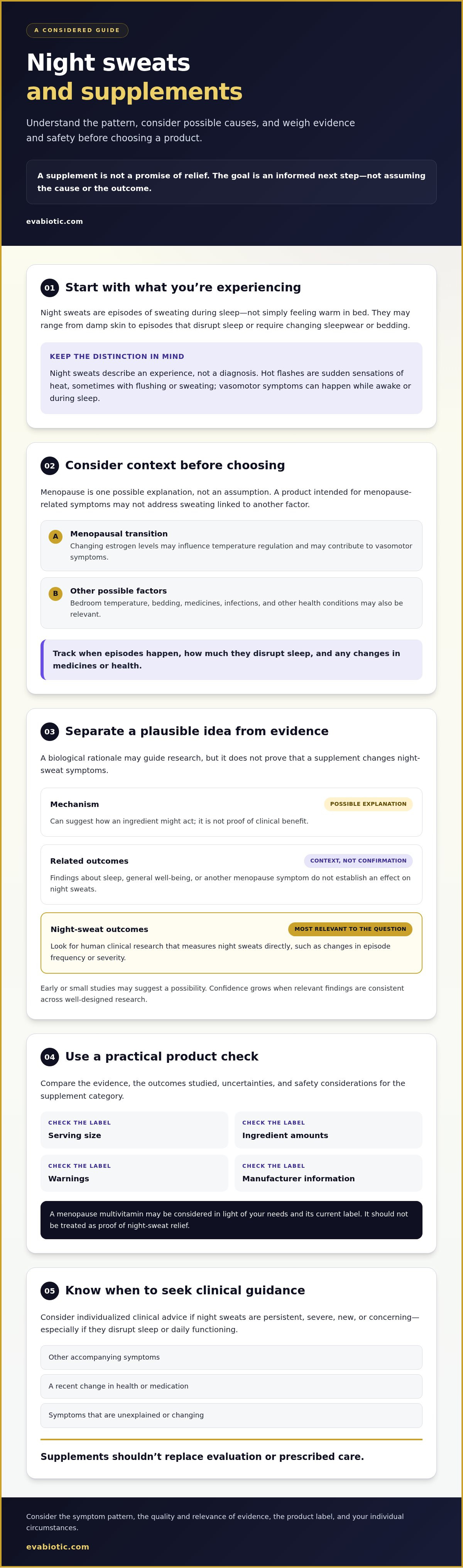
Checklist for choosing supplements for night sweats
Start with the symptom, not the product claim. These steps can help you organize what you know and identify questions to discuss with a healthcare professional.
- 1. Assess the pattern. Note when episodes happen, how often they occur, how disruptive they are, and whether anything else has changed. Persistent, severe, new, or concerning symptoms are a reason to seek clinical advice before relying on a supplement.
- 2. Check the evidence for the outcome you care about. Look for human studies that measured night-sweat frequency or severity. Don’t assume findings about hot flashes, sleep, or general menopause support apply. Consider the study design, participants, duration, and limitations.
- 3. Inspect the current label and product information. Confirm each ingredient and its amount, the serving size, directions, and warnings. Check whether the manufacturer is identified and whether the product information answers your questions. If details are unclear, ask the manufacturer or a healthcare professional rather than guessing.
- 4. Get individualized advice. Bring the label and a list of medicines and other supplements to a qualified healthcare professional. Personal health conditions, ongoing treatment, and potential interactions may affect whether a product is appropriate.
What should a supplement label and product page make clear?
Compare the exact ingredients and amounts on the current label with the product page. Check the amount per serving rather than relying on front-of-package language. Review directions and warnings, along with available manufacturer information and any quality details that matter to you. A clear label helps you understand what you’d be taking, but it doesn’t prove the product has been shown to reduce night sweats.
How can symptom tracking support a better next step?
A brief record can make a clinical conversation more specific. Note the timing and frequency of episodes, how severe they feel, how they affect sleep, and relevant context such as changes in medication or routine. Include when symptoms started and what you’ve already tried. This record may help a clinician assess the pattern without assuming that a supplement caused or will resolve it.
If you’re considering a menopause multivitamin, review its current product details against your needs without assuming it’s a treatment for night sweats. You can review Evabiotic Menopause Relief Multivitamins and check the label before discussing it with a healthcare professional.
Where a menopause multivitamin may fit, and how to make an informed decision
A menopause multivitamin may be one part of nutritional planning if its current label aligns with your needs. That is different from evidence that it reduces night sweats. The information available for Evabiotic Menopause Relief Multivitamins doesn’t establish the product as a night-sweat treatment, so consider it a product to evaluate, not a promised solution.
Before choosing among supplements for night sweats, separate two questions: does a product suit your nutritional situation, and is there reliable evidence for the symptom you want to address? A multivitamin’s name or intended audience doesn’t show that it will change the frequency or severity of night sweats.
Questions to ask before considering a menopause multivitamin
- Does the current label match my needs? Review the listed ingredients and amounts, then compare them with your diet, existing supplement routine, and any guidance you’ve received from a healthcare professional. Avoid unintentionally doubling up on nutrients from multiple products.
- Could an ingredient affect my circumstances? Ask a qualified healthcare professional or pharmacist to review the label alongside your medicines, health conditions, and other supplements. Suitability can depend on the specific ingredients and your individual circumstances.
- What outcome is realistic? Be clear about whether your goal is nutritional support or a change in night sweats. If you and your clinician decide a product is appropriate, discuss how you’ll assess its role and when to revisit the decision. Don’t let a lack of symptom change delay evaluation of persistent or concerning symptoms.
How to review Evabiotic Menopause Relief Multivitamins
Evabiotic offers Menopause Relief Multivitamins in a 60-capsule format, available for individual purchase or through a recurring subscription. Ingredient details and amounts aren’t specified here, so check the current label and product information directly before deciding. Make sure the details answer your questions, and discuss the label with a healthcare professional if you’re unsure how it fits your needs or current routine.
A careful review is a practical next step, not a reason to expect symptom relief. Review Evabiotic Menopause Relief Multivitamins, check the current product details, and make your decision based on the label and individualized advice.
Choose your next step with clear expectations
An informed approach to supplements for night sweats starts with considering possible causes, then checking whether the evidence measures night sweats directly. A proposed mechanism or general nutritional role isn’t proof that a supplement will reduce episodes. Review the current label, consider possible interactions, and seek clinical guidance for symptoms that are persistent, severe, new, or concerning.
A menopause multivitamin may be worth reviewing as part of nutritional planning, but the available information doesn’t establish it as a night-sweat treatment. Evabiotic Menopause Relief Multivitamins are offered in a 60-capsule format, with individual purchase and a recurring subscription listed as options. Check the current product details and discuss suitability with a healthcare professional before deciding.
To assess the product against your needs, review Evabiotic Menopause Relief Multivitamins and its current label, then discuss suitability with a healthcare professional.
Frequently Asked Questions
Is there a supplement that may help with night sweats?
Some ingredients have been studied for menopause-related symptoms, but the evidence depends on the ingredient and the outcome measured. Research on hot flashes, for example, doesn’t automatically show an effect on night sweats. No supplement is established here as universally effective. Because night sweats can have causes other than menopause, discuss persistent or concerning symptoms with a clinician and review a product’s label with a qualified healthcare professional.
Can menopause vitamins reduce night sweats?
A menopause multivitamin may complement nutritional intake, but that doesn’t establish that it reduces night sweats. A symptom-specific claim would require checking the product’s current ingredients and relevant clinical evidence. Check the label, consider whether another cause may be involved, and ask a healthcare professional whether the formulation fits your circumstances and existing supplement routine.
What happens if night sweats continue despite taking supplements?
Ongoing night sweats don’t prove that a supplement is ineffective, and they don’t establish menopause as the cause. Record when episodes happen, how severe they are, how they affect sleep, any accompanying symptoms, and which supplements you take. Share this information with a clinician for an individualized assessment. Don’t increase a product’s dose or combine supplements without appropriate professional guidance.
How do I choose a supplement for night sweats safely?
Check the exact ingredients and amounts, serving directions, warnings, and evidence for the symptom being addressed. Research on another menopause outcome or a proposed mechanism isn’t proof of reduced night sweats. Consider your medications, health conditions, and other supplements, then review the label with a qualified healthcare professional. Testimonials can describe personal experiences, but they don’t establish effectiveness for everyone.
Are natural supplements always safe for night sweats?
No. A natural origin doesn’t establish that a supplement is safe or suitable for you. Potential effects and interactions may depend on the ingredient, amount, medicines, and individual health circumstances. Read product warnings and discuss the label with a qualified healthcare professional before starting a supplement, particularly if you take medication or manage a health condition. Don’t assume any ingredient is risk-free for everyone.
When should I talk to a doctor about night sweats?
Seek clinical advice if night sweats are persistent, severe, new, worsening, or accompanied by other concerning changes. This doesn’t mean every episode signals a serious condition. It means the pattern and personal context may need assessment. A clinician can consider possible causes and discuss appropriate next steps. Don’t delay an evaluation while trying supplements if symptoms concern you.
Can a menopause multivitamin replace treatment for night sweats?
No. A multivitamin shouldn’t replace clinical assessment or prescribed care. Its potential role depends on the verified formulation and your individual needs, and it isn’t established here as a night-sweat treatment. Discuss persistent symptoms and any supplement with your healthcare professional, especially before changing or stopping existing care. Follow individualized guidance rather than relying on a product claim alone.
Disclaimer
*These statements have not been evaluated by the Food and Drug Administration. This product is not intended to diagnose, treat, cure or prevent any disease. The views and nutritional advice expressed by AlphaHealth+ Nutrition are not intended for the purpose of providing medical advice. Please always consult your health care provider if you are taking any medications or have any medical conditions. Individual results may vary.