

Itchy skin during menopause: Why it happens and what may help
Menopause can make skin dry and itchy as declining estrogen affects its ability to retain moisture. If you’re wondering what to do for itchy skin during menopause, begin with gentle care: take shorter, warm showers, use a fragrance-free cleanser, and apply moisturizer while your skin is still damp. Seek medical advice if the itching persists, worsens, or disrupts daily life.
Itching can be frustrating, especially when it appears without an obvious cause. Menopause-related skin changes may play a role, but other conditions can also cause persistent irritation.
This article explains how changing estrogen levels may affect your skin, practical ways to ease dryness and itching, and when to speak with a healthcare professional. It also covers how to distinguish manageable dryness from symptoms that need closer attention.
Key Takeaways
- Changing estrogen levels may affect skin moisture and its protective barrier, contributing to dryness and itching.
- Use gentle, fragrance-free skin care and apply moisturizer while skin is still damp after bathing.
- Notice whether hot showers, irritating products, clothing, or dry air appear to aggravate itching.
- Persistent, worsening, or disruptive itching deserves medical attention, particularly when accompanied by a rash or signs of infection.
- Learn how menopause-focused nutritional support may fit alongside practical skin care and appropriate medical advice.
1. Itchy menopause skin: What’s happening?
Common signs include tightness, flaking, rough patches, irritation, small bumps, and itching. Menopause-related dryness can affect different areas, and scratching may leave redness or broken skin.
Declining estrogen levels can reduce skin moisture and weaken its protective barrier. This barrier helps limit water loss and shield skin from irritants, so dryness may make everyday products or fabrics feel uncomfortable. Skin may also become more sensitive, particularly when soap, fragrance, or hot water adds irritation.
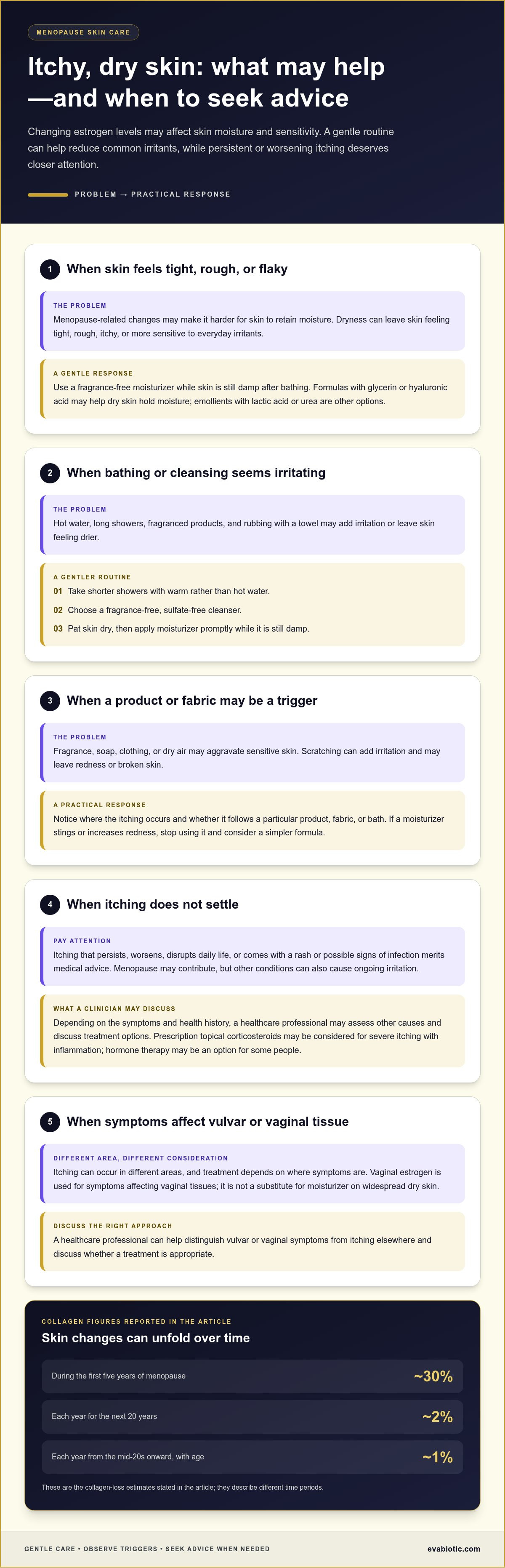
Collagen changes contribute to these shifts in skin texture and resilience. Women’s skin loses about 30% of its collagen during the first five years of menopause. After those first five years, it loses about 2% every year for the next 20 years. Collagen loss also occurs with age: skin loses about 1% each year from the mid-20s onward.
Reduced moisture retention can leave skin feeling rough, tight, or easily irritated. Dryness may begin during perimenopause and persist, so a consistent routine is more useful than occasional treatment. Note where itching occurs and whether it follows a particular cleanser, fabric, or bath. These details can help you identify triggers and make practical changes.
Choose a fragrance-free moisturizer with ingredients such as glycerin or hyaluronic acid, which can help dry skin hold moisture. Emollients containing lactic acid or urea are other options. If a product stings or increases redness, stop using it and choose a simpler formula. Apply moisturizer after bathing, while your skin is still damp, and reapply during the day when dry patches appear.
Keep cleansing gentle. Use a fragrance-free, sulfate-free cleanser and take shorter showers with warm rather than hot water to help protect natural oils. Pat your skin dry instead of rubbing with a towel, then moisturize promptly. For example, after a morning shower, apply moisturizer to your arms and legs before dressing. If itching persists despite these steps, a healthcare professional can assess other possible causes and whether prescription treatment is appropriate.
Declining estrogen can also contribute to dry, itchy skin, irritation, small bumps, and sometimes a rash. Skin discomfort may involve pain as well as itching: a study cited by the page estimates that roughly 64% or more of women in the menopausal transition experience varying degrees of skin pain. This range of sensations can help explain why menopause-related skin changes may feel different from simple dryness.
Drinking more water is unlikely to resolve menopause-related dry skin, because skin may not retain moisture as effectively as before. Regular use of emollients can help keep skin and vulvar tissue moisturized; options include products containing lactic acid, urea, glycerin, or hyaluronic acid. For dry skin, moisturizers with glycerin or hyaluronic acid may be useful. Gentle hygiene also means choosing fragrance-free, sulfate-free cleansers to avoid adding irritation.
2. How declining estrogen contributes to dry, itchy skin
Severe menopause-related itching may need more than moisturizer. A healthcare professional can assess your skin and consider prescription topical corticosteroid creams when itching is severe and inflammation is present. Hormone therapy may help some people with menopause-related itching, but treatment choices depend on symptoms and health history.
Estrogen supports several skin functions, including moisture retention and elasticity. As estrogen levels decrease, skin may hold water less effectively, leaving its surface drier and its barrier less resilient. A weakened barrier can make skin more vulnerable to everyday irritants, such as fragranced products or rough clothing. Dryness may contribute to itching, and repeated scratching can further irritate the skin. This helps explain why declining estrogen can affect both comfort and sensitivity.
Hormone replacement therapy, also called hormone therapy, uses estrogen, sometimes alongside progesterone. Some studies find that postmenopausal women taking hormone therapy retain more water in their skin than women not taking hormones. Hormone therapy may help dry, itchy skin and may also be considered for other menopause symptoms, such as hot flashes. Potential benefits and risks depend on your medical history and symptoms, so a clinician should assess whether this treatment is appropriate.
Low-dose topical estrogen is another option for menopause-related tissue changes. It may be provided as a cream, ring, or tablet, and may help restore tissue health and reduce itching. Vaginal estrogen is used for symptoms affecting vaginal tissues; it is not a substitute for moisturizer on widespread dry skin. A healthcare professional can distinguish vulvar or vaginal symptoms from itching elsewhere on the body and discuss appropriate treatment. Ospemifene or vaginal DHEA may also be considered for certain menopause-related concerns.
These treatments address different needs. A topical corticosteroid may reduce inflammation in a severe itchy area, while hormone therapy may be considered for broader menopause symptoms. Neither approach identifies the cause automatically, so describe where itching occurs, how long it has lasted, and whether a rash or other symptoms are present. This information helps guide the assessment and treatment discussion. Continue gentle skin care while seeking advice, but avoid starting prescription treatments without professional direction. For broader menopause nutrition support alongside skin care, explore menopause-focused nutritional support.
3. Can menopause cause itching?
Yes. Menopause can contribute to itching as changing estrogen levels lead to dryness and sensitivity. However, itching can have other causes, so persistent or severe symptoms deserve attention.
Perimenopause-related dryness is not the only possible explanation. Hypothyroidism, vitamin deficiencies, fungal infections, allergic reactions, and other skin conditions can also cause itching. A clinician can assess the pattern, examine visible irritation, and consider these causes, especially if basic skin care has not helped.
Location matters. Vaginal or vulvar itching may occur with genitourinary syndrome of menopause, a group of changes linked to lower estrogen in urinary and genital tissues. Dryness, irritation, and discomfort during sex may also occur. Vaginal moisturizers and lubricants may ease dryness and make intercourse more comfortable. Seek medical advice for persistent symptoms or unusual discharge rather than assuming all genital itching is menopause-related.
For temporary skin discomfort, try a lukewarm oatmeal bath. Add one cup of finely ground oatmeal and soak for 10 to 15 minutes, then pat skin dry gently. Oatmeal is approved by the Food and Drug Administration as a skin protectant. Avoid hot water, which can remove natural oil and leave dryness worse. Stop the bath if irritation increases.
Medical evaluation is important if itching persists, worsens, spreads, or interferes with sleep or daily activities. Seek care for painful itching, redness, swelling, pus, or a rash that does not settle. These signs may indicate an infection or another condition requiring treatment. If itching continues despite self-care, a healthcare professional can examine your skin and consider prescription options or tests for other causes.
Vitamins may be relevant when a deficiency contributes to itching, but taking supplements is not a reliable way to identify or treat the cause. A clinician may consider vitamin deficiencies alongside conditions such as hypothyroidism or fungal infection. Share the supplements and medicines you use, along with when the itching began and what makes it worse.
Menopause symptoms may improve over time and do not usually continue into the years following menopause. Skin dryness can nevertheless persist, so track changes rather than relying on age or menopause stage alone. Note whether itching is localized or widespread, whether a rash appears, and whether sleep is affected. This record can help distinguish manageable dryness from a problem that needs assessment.
4. How do you stop hormonal skin itching?
At home, reduce likely irritants and protect your skin’s moisture with a simple, consistent routine. Choose loose cotton clothing, keep showers brief, and note whether specific products or surroundings worsen irritation. These steps can help you identify triggers while limiting avoidable friction and dryness.
Start with bathing habits. Keep showers lukewarm and limit them to no more than 10 minutes once a day. Hot water and long baths can strip natural oils, increasing dryness. If you prefer a bath, keep it warm and limit it to 15 minutes. Afterward, pat skin dry and apply a fragrance-free moisturizer to damp areas.
Review products that touch your skin. Antibacterial and deodorant soaps can remove natural oils, while fragrance may irritate sensitive skin. Try one change at a time, such as switching to a fragrance-free cleanser, so you can tell whether symptoms improve. Avoid tight synthetic clothing if it rubs or traps heat; cotton underwear and loose layers may reduce friction around sensitive areas.
Your surroundings can also affect comfort. Low humidity and extreme temperatures may aggravate dryness, so use a humidifier when indoor air feels dry. Keep your fingernails short to limit skin injury from scratching. A simple diary can help: record the products you use, clothing you wear, weather, and where itching occurs. Patterns may reveal a specific trigger, such as a new cosmetic or an overheated room.
Food and daily habits matter, too. Include sources of essential fatty acids, such as nuts, salmon, flaxseeds, or high quality olive oil Canada shoppers often seek out for nutritional value, as part of a balanced diet. Drink fluids regularly and include water-rich foods, such as fruits and vegetables. If dairy or nuts seem to trigger irritation, record the pattern rather than removing foods without a clear reason. Regular physical activity, yoga, or meditation may support stress management; aim for 7-9 hours of sleep nightly when possible.
Protect exposed skin with sunscreen of SPF 30 or higher year-round. Avoid at-home exfoliation or microdermabrasion when skin is dry or easily irritated; thinner skin may be more vulnerable to injury. If creams cause burning or redness, stop using them and simplify your routine. Persistent or worsening symptoms, a spreading rash, or itching that disrupts sleep needs medical advice, since another condition may be involved.
5. When to seek medical advice
See a doctor if itching persists, worsens, spreads, or disrupts sleep or daily activities. Medical evaluation is also appropriate if lifestyle changes and gentle skin care do not bring relief after several weeks.
Some warning signs need prompt attention. Contact a healthcare professional for redness, swelling, or pus, which can indicate infection. A rash that lasts or worsens also deserves assessment, particularly if it becomes painful or spreads beyond its original area. These changes may signal a skin condition that needs treatment, rather than dryness alone.
Pay attention to symptoms beyond your skin. Dry, itchy skin alongside yellowish skin that feels cold to the touch is a reason to ask a doctor about a thyroid check. Diabetes and kidney disease can also contribute to itching. If you have either condition, or are concerned about them, discuss persistent skin symptoms with a healthcare professional.
Itching around the vulva needs attention if it comes with unusual discharge or pain. Vaginal bleeding or discharge after menopause warrants prompt medical care. Do not attribute these symptoms to hormonal dryness without an assessment. A clinician can evaluate the area and consider infection, tissue changes, or another cause.
Prepare for an appointment by noting when the itching began, where it occurs, and what makes it worse. Record any new soaps, creams, medicines, or supplements, along with rashes or other symptoms. Bring the products you use or write down their names. This information can help the doctor assess possible triggers and decide whether an examination or testing is appropriate.
Describe how the symptoms affect your comfort and daily routine. Mention whether itching wakes you, interrupts work, or makes bathing difficult. Explain which lifestyle changes you have tried, such as switching cleansers or moisturizing regularly. If a product causes burning or redness, include that detail. A clear timeline can help distinguish brief irritation from a persistent problem.
While waiting for an appointment, keep skin care simple and avoid scratching irritated areas. Do not apply prescription creams unless they were prescribed for this episode or a clinician advises you to use them. Seek care sooner if symptoms worsen rapidly, signs of infection appear, or postmenopausal bleeding occurs. Identifying the cause matters: care for a weakened skin barrier differs from treatment for infection, thyroid problems, or another medical condition.
Evabiotic: Menopause Relief Multivitamins (60 Capsules)
Evabiotic’s Menopause Relief Multivitamins (60 Capsules) are intended to support women through the stages of menopause. They may complement everyday wellbeing, but they are not a treatment for itchy skin or a substitute for medical care when symptoms persist or worsen.
If you’re looking for nutritional support alongside these skin-care steps, Evabiotic’s menopause relief multivitamin is available as a one-time purchase or subscription. Moisturizers address skin dryness directly, while a supplement may be part of a broader menopause-support routine. Discuss supplements with a healthcare professional if you have health conditions or take medication.
For more information, visit evabiotic.com.
Build a routine that works for you
Over the next few weeks, observe how your skin responds to a steady, gentle routine. Briefly note when itching occurs, what you applied, and whether anything changed. These observations can help you recognize patterns and make your next conversation with a healthcare professional more useful. If symptoms continue to affect your comfort, bring your notes to the appointment rather than trying several new products at once.
Knowing what to do for itchy skin during menopause also means choosing support that fits your broader needs. Skin care and medical evaluation address different concerns; nutritional supplements are not a substitute for assessing persistent itching or treating its underlying cause. If you’re considering menopause-focused nutritional support as part of your routine, explore Evabiotic’s menopause support.
Small, considered steps can make it easier to understand what your skin needs. Keep observing, adjust thoughtfully, and seek professional guidance when symptoms call for it.
Frequently Asked Questions
Can menopause cause itching?
Yes, menopause can contribute to itchy skin, but it is not the only possible cause. Notice whether the sensation follows a new detergent, clothing, or medicine, and whether it comes with visible skin changes. For example, itching after switching laundry products may point to irritation rather than menopause alone. A brief symptom record can help you discuss patterns with a healthcare professional if the itching continues.
Itchy menopause skin: What’s happening?
Changing estrogen levels may make skin less able to retain moisture, leaving it tight, rough, or itchy. The experience varies: one person may notice flaky patches, while another mainly feels irritation without an obvious rash. Compare how your skin looks and feels before and after bathing or using a product. These observations can help distinguish dryness from a reaction to something touching your skin.
How do you stop hormonal skin itching?
For what to do for itchy skin during menopause, start by reducing likely irritants and changing one routine at a time. Choose a gentle, unscented product, avoid scratching, and note whether symptoms shift. A cool compress can provide a brief soothing sensation on an irritated area. If itching keeps returning, spreads, or interferes with sleep, seek medical advice instead of repeatedly adding new creams or supplements.
Is pruritus related to other types of menopausal altered skin sensations?
Pruritus is the medical term for itching; it describes the urge or sensation to scratch. People may also describe skin discomfort as stinging or unusual sensitivity, but those sensations do not establish a cause on their own. Record exactly how it feels, where it occurs, and whether there are visible changes. Clear descriptions can help a clinician decide whether the issue seems skin-related or needs broader assessment.
Is there a specific time of day it typically occurs?
Itching does not follow a fixed daily schedule. You might notice it more at night because warmth under bedding, sweat, or fewer daytime distractions can make an existing sensation harder to ignore. Track the timing alongside room conditions, clothing, and skin products. If nighttime itching repeatedly interrupts sleep or becomes persistent, mention the pattern at a medical appointment.
Menopause itch: Why it happens, how to soothe it, and will it go away?
Menopause-related itching can accompany dryness and changes in skin sensitivity. A simple routine, fewer irritating products, and regular observation may help you identify what aggravates it. Menopause symptoms can improve over time, but dry skin may persist, so itching does not follow the same timeline for everyone. If it continues or worsens, seek an assessment rather than assuming it will resolve without care.
What are the most common areas affected by this symptom?
Itching can occur on different parts of the body, and its location alone cannot confirm menopause as the cause. Note whether it is limited to one patch or appears across several areas, and whether you can see skin changes. Itching around the vulva may occur alongside vaginal dryness or discomfort, but persistent symptoms or unusual discharge need medical assessment. Sharing the precise location can help guide that discussion.
When should you see a doctor?
Arrange medical advice if itching persists, spreads, worsens, disrupts sleep, or does not improve with gentle care. Seek prompt attention for pus, swelling, or painful irritation. Vaginal bleeding or discharge after menopause also warrants prompt care. Before an appointment, write down when symptoms began, what products or medicines changed, and whether you have a rash. These details can help the clinician assess possible causes and next steps.
Disclaimer
*These statements have not been evaluated by the Food and Drug Administration. This product is not intended to diagnose, treat, cure or prevent any disease. The views and nutritional advice expressed by AlphaHealth+ Nutrition are not intended for the purpose of providing medical advice. Please always consult your health care provider if you are taking any medications or have any medical conditions. Individual results may vary.