

Menopause Hot Flashes at Night: Causes and Practical Relief
Why can a familiar wave of heat feel more disruptive after dark? Menopause hot flashes at night may share the same underlying vasomotor changes as daytime episodes, but waking overheated or sweaty can make it harder to return to sleep. Repeated interruptions can leave you tired and wondering whether menopause is the only possible cause.
If this sounds familiar, your experience is real, and practical steps may help make nights more manageable. Bedroom temperature, bedding, evening habits, and individual triggers can all affect comfort, though no single strategy works for everyone.
This article explains how nighttime hot flashes relate to daytime symptoms, offers practical ways to adjust your sleep environment, and shows how tracking episodes may reveal patterns. It also covers when persistent or unusual night sweats merit a conversation with a healthcare professional, what treatment options may be discussed, and how to assess supplement claims carefully. The goal is to help you make informed choices without assuming every episode has the same cause or that a supplement can treat it.
Key Takeaways
- Menopause hot flashes at night are hot-flash episodes during sleep, but their frequency and intensity vary from person to person.
- Heat, sweating, and waking may interrupt sleep, though other factors can also contribute to nighttime waking.
- Try a flexible bedtime setup with breathable sleepwear, layered bedding, and a fan if moving air feels comfortable.
- Track episodes and patterns to support a specific conversation with a healthcare professional about persistent, severe, or changing symptoms.
- A menopause multivitamin may fit into a daily nutrition routine, but it isn’t a proven treatment for nighttime hot flashes or a substitute for clinical care.
What are menopause hot flashes at night, and how do they differ from daytime episodes?
Night sweats are hot-flash episodes that happen during sleep. The experience may resemble a daytime hot flash, but the setting changes its impact: warmth or sweating may wake you, disturb your rest, or leave you trying to work out what happened once you are fully alert. The term vasomotor symptoms is often used for hot flashes and night sweats associated with menopause. The timing may differ, but the episode is not necessarily a separate kind of symptom.
People describe hot flashes in different ways. A sudden feeling of warmth may spread through the upper body or face, sometimes with flushing and perspiration. Some people feel chilled afterward. These sensations can occur in different combinations, and their intensity and frequency vary. There is no single pattern everyone should expect.
How can you recognize a nighttime hot flash?
You might wake feeling unusually warm, notice damp sleepwear or bedding, or become aware of flushing and sweat. A chill may follow as your body cools. Not everyone experiences all of these sensations, and waking midway through an episode can make it difficult to judge when it began or how long it lasted.
Nighttime timing can make an episode feel more disruptive than a similar daytime wave. During the day, you may notice the heat while continuing an activity. At night, waking and settling back to sleep become part of the experience. That difference in impact does not mean the underlying hot flash is fundamentally different.
Are night sweats simply hot flashes during sleep?
Night sweats are hot flashes that occur during sleep, often experienced as sudden warmth and sweating that may wake a person. This concise description reflects the common relationship between night sweats and vasomotor symptoms. The Hot flash overview also describes hot flashes and their possible nighttime presentation.
Menopause can be one explanation for nighttime episodes, particularly when they occur alongside other changes associated with the menopause transition. However, sweating during sleep is not automatically menopause-related. Room temperature, bedding, medicines, and other health factors may also be relevant, so consider the broader pattern rather than relying on one episode to identify its cause.
If sweating is persistent, unexplained, changing, or concerning, discuss it with a healthcare professional, especially if it occurs with other symptoms. A clinician can consider your health history and circumstances when assessing possible causes. A brief record of when episodes happen and what you notice may help you describe the pattern clearly.
Why can menopause hot flashes at night disrupt sleep?
A hot flash may bring a sudden rise in warmth and sweating that wakes you or makes it harder to stay comfortable in bed. You might throw off the covers, change a damp top, or take time to settle again. The episode and the sleep interruption are connected, but they are not identical: one hot flash does not automatically mean you have insomnia, and not every episode will wake you fully.
Sleep can also be interrupted for reasons unrelated to hot flashes, including stress, discomfort, noise, or needing to use the bathroom. If you wake, it can be difficult to tell whether a hot flash started the interruption or occurred after you were already awake. Keeping those possibilities separate can help you notice patterns without jumping to conclusions about the cause.
What may happen to sleep during an episode?
After waking, you may feel alert, uncomfortable, or frustrated, particularly if you need to adjust bedding before settling down. A brief awakening may have little effect on the rest of your night. Repeated interruptions, however, can make sleep feel less restorative and may affect daytime energy or concentration. Occasional waking alone doesn’t establish insomnia. If disrupted sleep continues or affects your daily wellbeing, consider discussing it with a healthcare professional.
Which patterns or triggers are worth tracking?
Potential triggers differ from person to person, so treat them as patterns to observe rather than universal causes. Bedroom temperature, alcohol, spicy food, and caffeine are examples you might note alongside the timing of an episode. A simple record can help you see whether something tends to precede symptoms, though a diary cannot diagnose their cause.
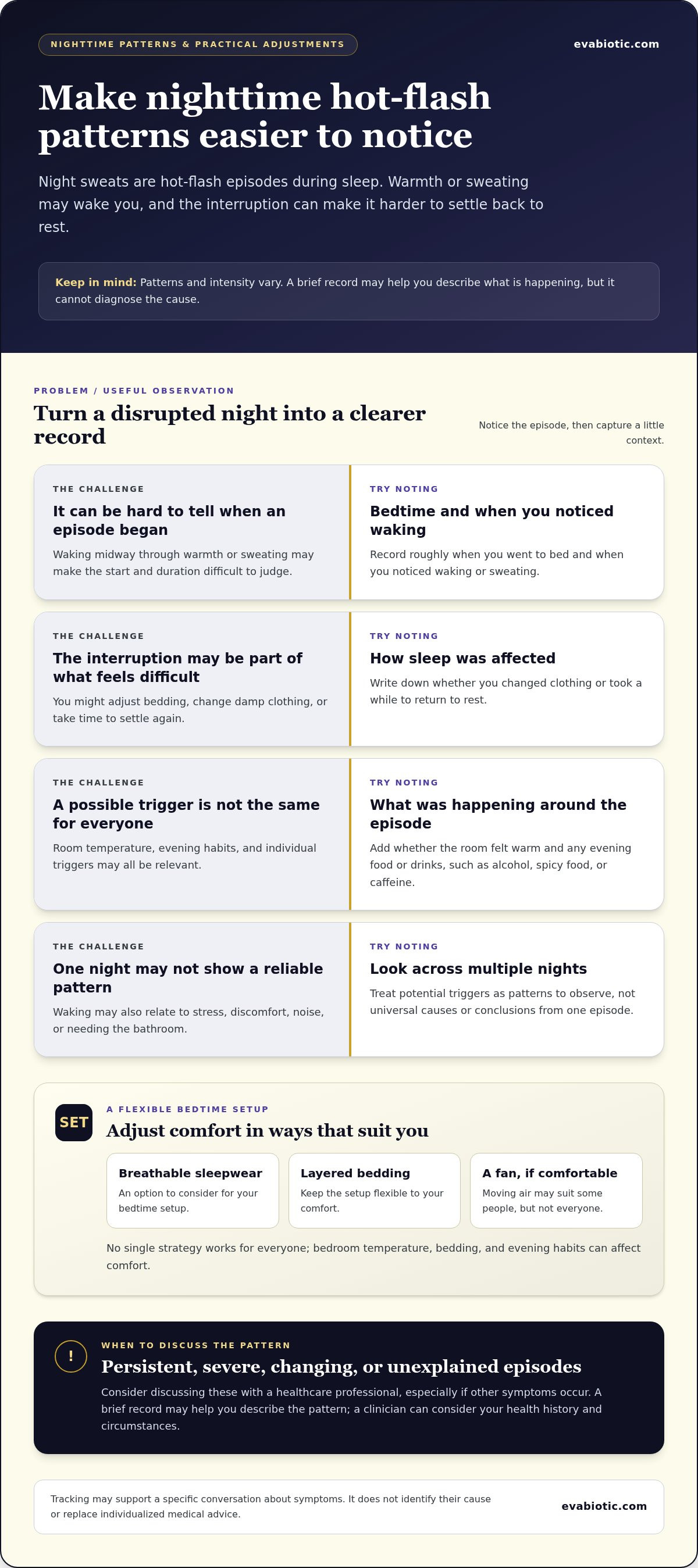
- Record roughly when you went to bed and when you noticed waking or sweating.
- Note how the episode affected sleep, such as whether you needed to change clothing or took a while to return to rest.
- Add relevant context from the day, including evening food or drinks and whether the room felt warm.
- Look for patterns across multiple nights rather than drawing a conclusion from one episode.
These observations may help you describe what’s happening in a clinical conversation. The National Institute on Aging’s guidance on managing hot flashes offers additional context on practical approaches and seeking professional advice. For related information on non-medical approaches, see this guide to natural remedies for hot flashes.
Tracking sleep and daily context can be useful alongside a broader nutrition routine, but a supplement shouldn’t be treated as a proven remedy for nighttime episodes. If you’re considering nutritional support during menopause, you can review Evabiotic’s menopause relief multivitamin as one option. It doesn’t replace individualized medical advice or treatment.
What practical steps may help manage hot flashes at night?
There’s no single bedtime setup that suits everyone. Make the sleep environment easy to adjust, then observe what feels comfortable. For menopause hot flashes at night, small changes may make it easier to respond when you wake, even if they don’t prevent an episode. Change one variable at a time, such as bedding or an evening habit, so you can tell whether the adjustment seems useful.
Try this adaptable routine:
- Set up for comfort. Choose breathable sleepwear and keep a fan nearby if moving air feels comfortable.
- Make layers adjustable. Use bedding you can add or remove easily, rather than relying on one heavy cover.
- Keep essentials within reach. Place water, spare sleepwear, or a light cover where you can access them without much effort.
- Wind down consistently. When practical, follow a calm, familiar bedtime routine and note any changes you’re testing.
How can you prepare the bedroom for nighttime comfort?
Think of the room setup as a comfort measure, not a treatment. If you wake feeling warm, adjustable covers and breathable fabric may make it simpler to get comfortable again. Airflow from a fan may suit some people and bother others, so use it only if it feels pleasant—options like a bedside cooling fan from FrostWave can provide targeted relief without chilling the entire room. Keep a spare top or light cover nearby if changing layers helps you settle with less disruption.
A predictable wind-down routine can also provide structure around bedtime. Choose steps that feel calming and realistic for your schedule. The goal is consistency, not a perfect routine. If a change makes you less comfortable, adjust it rather than following a rule that doesn’t fit.
How can a symptom diary make next steps clearer?
A brief diary can help you describe what happens and identify recurring context. Note the approximate time, sensations you noticed, whether you woke fully, and how sleep was affected. Add relevant details such as room temperature or evening food and drinks, but treat them as observations, not proof of a cause. Review entries over time for patterns, and share persistent or concerning symptoms with a healthcare professional.
A symptom diary turns individual nights into a clearer record that can support more personalized conversations and choices.
Keep the process manageable. A few notes in a notebook or phone may be enough; detailed tracking shouldn’t become another source of stress. If you test a bedroom adjustment, give yourself time to observe it while avoiding several simultaneous changes, which can make it harder to tell what feels helpful. Patterns can guide questions, but they can’t diagnose the reason for sweating or waking.
These sleep-focused steps are separate from decisions about nutritional support. If you’re considering a supplement as part of your broader menopause routine, Evabiotic’s menopause relief multivitamin is one option to review. It shouldn’t be treated as a proven way to prevent or treat nighttime hot flashes, or as a replacement for individualized clinical guidance.
When should you discuss nighttime hot flashes with a healthcare professional?
Consider a clinical conversation if nighttime episodes persist, feel severe, change noticeably, or affect your sleep and daily functioning. You don’t need to wait for a particular number of episodes. The impact on your wellbeing, the pattern over time, and your overall health are useful context for deciding what to discuss.
Nighttime sweating can have causes other than menopause, so new or unexplained symptoms deserve individualized assessment rather than an assumption about their source. A clinician can consider your health history and other relevant factors. If you have been tracking episodes, share the notes: approximate timing, what you experienced, and how it affected your sleep can help describe the pattern.
Which symptoms or changes deserve medical attention?
Seek professional guidance if episodes repeatedly interrupt rest, leave you struggling during the day, or occur alongside symptoms that concern you. A change in your usual pattern or sweating that seems unexplained is also worth raising. There is no single threshold that applies to everyone. Describe what has changed and how it affects you so a clinician can help determine appropriate next steps.
What treatment options may a clinician discuss?
Options depend on your symptoms, health history, preferences, and individual risks. They may include menopausal hormone therapy or prescription nonhormonal approaches. The American College of Physicians’ October 2026 guideline recommends menopausal hormone therapy as a first-line option for vasomotor symptoms, with certain nonhormonal medicines among the options when hormone therapy isn’t suitable or preferred. This is guidance for clinical decision-making, not a personal recommendation. A clinician can explain how it applies to your circumstances.
Hormonal and nonhormonal prescription treatments are medical approaches that require individualized consideration. Supplements have a different role and evidence base. A multivitamin may be considered for nutritional support, but it shouldn’t be presented as a proven treatment for menopause hot flashes at night or as a substitute for evaluation and established care. Discuss supplements with a healthcare professional, particularly if you take medicines or have health conditions.
Don’t start, stop, or change a prescribed treatment based only on an article. Instead, use your appointment to ask what options may fit your goals, what potential benefits and risks apply to you, and how progress might be reviewed. Shared decisions can account for both symptom burden and personal preferences.
If you’re considering a supplement for daily nutritional support during menopause, review Evabiotic’s menopause relief multivitamin and discuss whether it fits your needs with a healthcare professional.
Can menopause multivitamins help with hot flashes at night?
A multivitamin shouldn’t be presented as a proven treatment for menopause hot flashes at night. The Menopause Society’s 2023 position statement reported that no vitamin or herbal supplement had been shown to relieve hot flashes and night sweats more effectively than a placebo. That does not mean every supplement has the same purpose; it does mean symptom-relief claims deserve careful scrutiny.
Nutritional supplements may be part of a daily dietary routine, but they can’t replace assessment of persistent symptoms or treatments recommended for your circumstances. A clinician can help distinguish general nutritional support from care intended to address vasomotor symptoms and discuss whether a supplement is appropriate alongside your medicines and health needs.
What can a menopause multivitamin reasonably be expected to do?
A menopause multivitamin is best considered in the context of nutrition, not as a guaranteed way to prevent or stop nighttime episodes. Any potential effect depends on the formulation and individual circumstances, and a product’s name alone doesn’t establish that it treats hot flashes. Evabiotic offers a 60-capsule menopause relief multivitamin for people considering daily nutritional support during menopause.
If you’re weighing a supplement, consider your diet, health history, and current medicines. A healthcare professional can help you decide whether it fits your needs, particularly if symptoms are disrupting sleep or you’re already receiving treatment.
How should readers assess supplement claims?
Look for clear information about ingredients, amounts, and the evidence behind specific claims. Distinguish personal testimonials and promotional language from clinical research: an individual account may describe one person’s experience, but it doesn’t establish that a product will have the same effect for others. Be cautious if broad promises about symptom relief aren’t accompanied by relevant evidence.
Also consider what the evidence actually studied. Research on one ingredient, dose, or group of people may not apply to a different formulation or to your individual situation. If a claim says a multivitamin treats nighttime hot flashes, compare that statement with established clinical guidance and raise questions with a qualified healthcare professional. Don’t stop or delay care that’s already been recommended because of a supplement claim.
A practical next step is to decide what you want support with: general nutrition, sleep disruption, or hot-flash symptoms. These are related concerns, but they may call for different conversations and decisions. You can bring a product label and your questions to a clinician or pharmacist, especially if you take prescription medicines or have health conditions. Your choices should reflect your preferences and health needs, without assuming a supplement can replace individualized care.
To review Evabiotic’s menopause relief multivitamin as a nutritional support option, view the product details and consider how it fits your routine.
Choose a next step that fits your needs
Start with what you want to change: getting more useful information about your sleep, preparing for a clinical conversation, or considering nutritional support as part of your routine. You don’t have to make every decision at once. A manageable next step can help you move forward without treating menopause hot flashes at night as a problem with one universal solution.
If you’re considering a supplement, weigh its purpose separately from care for disruptive symptoms. Evabiotic offers a menopause relief multivitamin in a 60-capsule format, with a recurring subscription option for monthly supplies. These are nutritional support choices, not proven treatment for nighttime hot flashes. Your own health needs and preferences should guide whether they fit.
Explore Evabiotic’s menopause relief multivitamin and consider whether it aligns with your daily routine. Bring questions about supplement use or ongoing sleep disruption to a healthcare professional. A thoughtful, individualized approach can help you make choices with greater clarity and confidence.
Frequently Asked Questions
Are menopause night sweats the same as hot flashes?
Yes. Menopause-related night sweats are hot flashes that occur during sleep, though warmth, flushing, sweating, and a chill afterward may vary in combination and intensity. The term describes when an episode happens, not what caused it. A warm room, medication effects, or other health factors may also contribute to nighttime sweating. If episodes persist without a clear explanation or feel unusual for you, seek an individualized professional assessment.
Can menopause hot flashes happen only at night?
Yes. Some people notice menopause hot flashes at night, some during the day, and some at both times. A nighttime-only pattern doesn’t confirm menopause as the cause, just as daytime episodes don’t rule it out. Note whether symptoms occur around sleep, after particular evening routines, or during the day, and whether they affect rest. Discuss a persistent or disruptive pattern with a healthcare professional for guidance tailored to your circumstances.
Why do I wake up sweating during menopause?
A menopause-related vasomotor episode may bring sudden warmth and sweating during sleep, but waking sweaty doesn’t establish menopause as the cause. Room conditions, medicines, and other health factors may also play a part. Consider whether the room felt unusually warm, but don’t use that observation alone to self-diagnose. Seek clinical advice if sweating is new, persistent, severe, or otherwise concerning, so possible explanations can be assessed in context.
What should I do during a hot flash at night?
Try making yourself comfortable rather than forcing a particular response: loosen or change sleepwear, adjust covers, allow airflow if it feels pleasant, and keep water within reach. These steps may make an episode easier to manage, but they can’t guarantee prevention or a quick return to sleep. Afterward, briefly note what you tried and whether it suited you. If episodes repeatedly interrupt rest, discuss their impact with a healthcare professional.
When should I see a healthcare professional about night sweats?
Seek individualized guidance if nighttime episodes are persistent, severe, changing, unexplained, or affecting your sleep and daily life. There’s no universal episode count that determines when to seek advice. A clinician can consider menopause alongside other possible causes, review your health history and medicines, and discuss options suited to your circumstances. Bring a concise description of when symptoms started and what has changed; this can help focus the conversation without presuming a diagnosis.
Can a menopause multivitamin stop hot flashes at night?
A menopause multivitamin shouldn’t be considered a proven treatment for nighttime hot flashes. Its possible role is nutritional support, which depends on its formulation and your individual needs, rather than a promise of symptom relief. Read product information carefully and distinguish evidence from testimonials or broad marketing language. If you take medicines, use other treatments, or have health concerns, discuss supplement use with a healthcare professional before adding it to your routine.
Disclaimer
*These statements have not been evaluated by the Food and Drug Administration. This product is not intended to diagnose, treat, cure or prevent any disease. The views and nutritional advice expressed by AlphaHealth+ Nutrition are not intended for the purpose of providing medical advice. Please always consult your health care provider if you are taking any medications or have any medical conditions. Individual results may vary.