

Menopause-Related Irritability: Causes and Ways to Cope
Anger rarely has a single cause. Dealing with menopause-related irritability often means looking beyond supplements: a multivitamin may support nutritional intake, but it shouldn’t be relied on as the sole way to manage mood changes. Hormonal shifts, disrupted sleep, stress, and everyday pressures can all play a part.
When irritability affects how you feel or relate to others, it’s understandable to want practical answers. This article looks at possible triggers, ways routines and conversations with loved ones may help, and when to seek professional support. It also explains how to track patterns and consider supplements as one part of a broader approach, not a quick fix.
Key Takeaways
- Notice when irritability occurs and track possible links with sleep, stress, and other menopause symptoms.
- Try practical calming habits, such as steady breathing, regular movement, and consistent meals, to support day-to-day emotional balance.
- Discuss changing needs with loved ones when everyone is calm, and explain what kind of support would be helpful.
- Seek professional support if mood changes persist, disrupt daily life, or include feelings of hopelessness.
- Consider a menopause-focused multivitamin as one part of a broader wellness routine, not as a stand-alone solution for mood concerns.
How Can I Cope With the Emotional Changes of Menopause?
Menopause-related mood changes may be associated with shifting estrogen levels, disrupted sleep, and stress. If irritability affects daily life, track when it occurs and what else is happening at the time.
Hormonal Changes and Mood
During perimenopause, changing estrogen levels may contribute to irritability, stress, anxiety, and forgetfulness. Emotional responses can feel less predictable, particularly when sleep is also affected. The U.S. Department of Health & Human Services notes that hormonal changes during menopause can affect sleep, which may contribute to mood changes. Tracking sleep alongside mood can help you spot patterns.
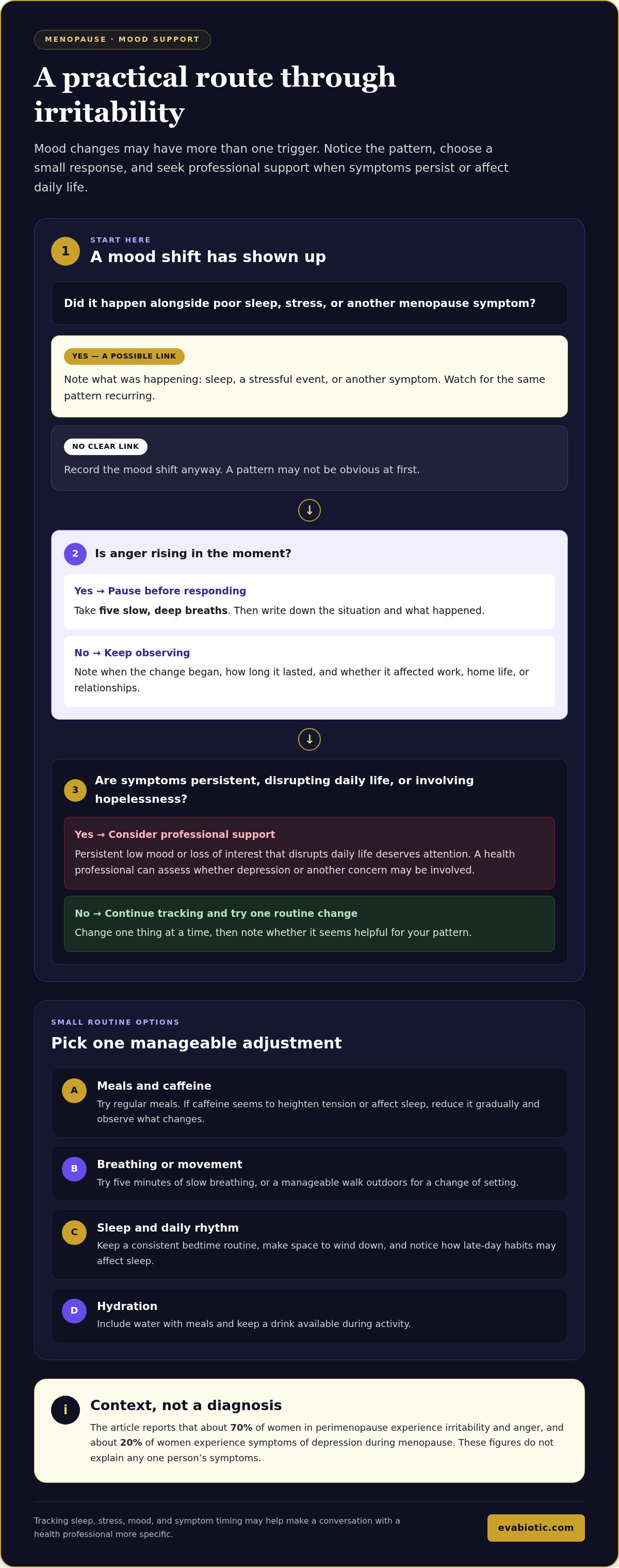
About 70% of women in perimenopause experience irritability and anger. That figure can help put the experience in context, but it doesn’t explain every person’s symptoms. Note whether a difficult mood follows a poor night’s sleep, a stressful event, or another menopause symptom. Those observations can make a conversation with a medical professional more specific.
Recognizing Mood Changes Versus Depression
Menopause-related mood changes may fluctuate, while depression can involve persistent low mood or loss of interest that disrupts daily life. About 20% of women experience symptoms of depression during menopause. This distinction matters because ongoing symptoms deserve attention rather than being dismissed as a hormone effect.
For example, brief irritability after a restless night is different from feeling hopeless or losing interest in activities over time. Record when symptoms begin, how long they last, and whether they affect work, home life, or relationships. A health professional can use these details to assess whether depression or another concern may be involved.
Irritability and Mood Swings
Irritability may show up as a shorter temper, frustration, or anger that feels stronger than the situation seems to warrant. Mood swings involve changes between emotional states, and anxiety or forgetfulness may occur alongside them. Identifying your specific pattern can help you recognize triggers and choose a useful response.
When anger starts to rise, pause and take five slow, deep breaths before responding. Notice the situation, such as a rushed morning or tense conversation, and write down what happened afterward. A simple record can reveal whether particular situations repeatedly coincide with mood changes. This is a practical first step in dealing with menopause-related irritability.
Lifestyle Approaches to Fluctuating Emotions
Small routine changes may support emotional steadiness without treating every mood shift as a personal failing. Try eating regular meals, as going too long without food may contribute to drops in blood sugar and irritability. If caffeine seems to heighten tension or affect sleep, reduce it gradually and observe whether your mood changes.
Movement, such as walking outdoors, can offer a break from a stressful setting. A creative activity with a clear sense of completion may also give your attention a constructive focus. Change one thing at a time, such as sleep, caffeine, meals, or activity, and track whether it seems helpful for your pattern.
Exercise, sleep, hydration, and lifestyle strategies
Regular movement, restful sleep, and steady daily routines can support emotional well-being during menopause. Choose changes that suit your energy and schedule.
Breathing, Yoga, and Meditation
Breathing exercises, yoga, and meditation can provide structure during stressful moments. Try five minutes of slow breathing, inhaling for five counts and exhaling for five counts. A short daily mindfulness practice, even five to ten minutes, may make it easier to pause before reacting. Gentle yoga combines movement with focused breathing and may create a calmer transition between work and home responsibilities.
Walking and Light Exercise
Walking outdoors or choosing light exercise provides movement and a change of setting when tension builds. A ten-minute walk can create space to reset without requiring a full workout. Start with an activity that feels manageable, then adjust it to your energy. Regular movement can support sleep and mood, while completing a planned walk may help build confidence in maintaining a routine.
Exercise, Anxiety, and Self-Esteem
Physical activity can support anxiety relief by giving the body a constructive outlet for stress. The American Heart Association recommends at least 150 minutes of moderate exercise per week. That goal can include brisk walking, cycling, or water aerobics, distributed across the week to fit personal capacity. Resistance exercise can also build strength and a sense of competence. These benefits matter even when weight does not change, because progress can be measured through consistency, stamina, or completing a session.
Start with a few short sessions if a longer routine feels difficult to maintain. Choose an activity comfortable enough to repeat, and note how your mood and energy respond afterward. If hormone therapy is part of your care, exercise is a separate lifestyle practice, not a substitute for discussing symptoms or treatment with a health professional.
Sleep, Hydration, and Daily Routines
Menopause symptoms can interrupt sleep, and poor rest may make emotional regulation harder. Keep a consistent bedtime routine and make your bedroom a calm place to wind down. Include hydration in your routine by having water with meals and keeping a drink available during activity. Regular meals may also help avoid blood sugar drops that can trigger irritability. Notice how late-day habits affect sleep, then adjust one routine at a time.
For a broader nutrition routine, menopause relief multivitamins may be considered alongside balanced eating and other supportive habits.
Sleep disruption, stress, and other symptom triggers
Night sweats, hot flashes, and daily stress can interrupt rest and affect mood. Tracking when symptoms occur can reveal patterns that may need attention.
Stress Management and Sleep Hygiene
Sleep hygiene means keeping bedtime habits consistent and reducing disruptions that make rest harder. A predictable routine can help separate the day’s demands from time set aside for sleep. For example, turn off phones and televisions about two hours before bed, then choose a quieter activity, such as reading or unwinding with soothing wellness teas from Spirit of the Earth.
Caffeine and alcohol can worsen anxiety and disrupt sleep, making emotional regulation harder. Note when you consume them and whether the timing coincides with restless nights or mood swings. If stress is high, write down pressing concerns before bed and identify one manageable task for tomorrow. Keep notes about symptoms, stress, and sleep together so patterns are easier to discuss at a medical appointment. If weight concerns add to your stress, record them separately rather than assuming they explain mood changes.
Sleep Loss and Mood
Sleep loss can reduce the emotional buffer available for handling everyday frustrations. According to the CDC, one night of sleep lasting under six hours lowers a person’s stress buffer. That may make a tense conversation or unexpected change feel harder to manage the next day. Menopause symptoms, including hot flashes and night sweats, can disrupt sleep and contribute to anxiety or low mood.
Look for links between interrupted rest and irritability instead of treating each difficult day as an isolated event. For example, note whether a night of repeated waking is followed by impatience at work or less tolerance for household demands. Briefly record bedtime, waking, night sweats, caffeine, alcohol, and mood each day. This can help distinguish a recurring sleep-related pattern from mood changes that continue regardless of rest.
Protect a calm wind-down period and keep screens away from bedtime. If you wake after a hot flash, note what happened and how rested you feel the next morning. Use these observations to discuss persistent sleep problems or mood symptoms with a healthcare professional. Clear details can help focus the conversation on what may be affecting your rest and emotional well-being.
When to seek medical or mental health support
Seek support when mood changes persist, disrupt daily life, or become increasingly difficult to manage. A symptom diary can help you describe patterns clearly.
Medical Treatment Options
A medical assessment can explore whether menopause symptoms, depression, anxiety, or another condition may contribute to emotional changes. Bring notes about mood, sleep, hot flashes, and effects on work or home life. A clinician can consider treatment options in light of your symptoms and health history. Hormone therapy may help with some menopause symptoms, but it isn’t effective on its own for more severe depression.
Cognitive behavioral therapy (CBT) offers practical strategies for noticing thoughts that intensify distress and developing alternative responses. It may also address related concerns such as low mood and disrupted sleep. A therapist can help you apply these skills to specific situations, such as feeling overwhelmed during a disagreement or struggling to settle after a difficult day.
Antidepressants and Antianxiety Medication
Antidepressants may be used to treat depression and anxiety, including mood concerns during menopause. When discussing medication, a clinician considers the symptoms being treated, their effect on daily life, and other health factors. Describe whether low mood, worry, or irritability is most disruptive. Hormone treatment and antidepressants address different concerns, so one should not be assumed to replace the other.
Therapy can complement medication by helping you recognize emotional triggers and practice responses. For example, CBT may help you identify thoughts that escalate conflict and replace them with more balanced interpretations. If symptoms persist or interfere with relationships, work, or daily responsibilities, discuss both options with a qualified professional.
Supplements and Medication Interactions
“Natural” supplements can still interact with medication. Black cohosh, St. John’s wort, and evening primrose oil may affect how other medicines work, so speak with a healthcare professional before using them. Bring a complete list of prescriptions, over-the-counter products, and supplements to the discussion. This gives the professional relevant information when considering possible interactions and your symptoms.
When to Seek Medical or Emergency Help
Arrange professional support if irritability significantly disrupts daily life, or if sadness, hopelessness, or loss of interest persists. A clinician can assess possible causes and discuss appropriate care. Describe what has changed, when symptoms began, and which activities have become harder. These details can help distinguish a passing difficult period from a concern that needs further attention.
If you’re considering harming yourself or someone else, call 911 or 988, or go to an emergency room. If hopelessness or loss of interest is becoming pronounced, contact a doctor promptly. Immediate support matters when safety is at risk; tell someone you trust what is happening while seeking help.
Communication and relationship support
Menopause symptoms can affect relationships when irritability, hot flashes, or disrupted sleep change daily routines. Clear, calm conversations can help loved ones understand what is happening and what support would be useful.
Choose a quiet moment to raise a sensitive topic rather than bringing it up during an argument. You might say, “I’ve been feeling more irritable lately, and I’m trying to understand the pattern. Could you give me a few minutes to pause when I feel overwhelmed?” A specific request gives your partner something practical to respond to instead of leaving them to guess.
Understanding may take time. In a 2023 survey, one in four husbands said they knew little or nothing about menopause. Share a concise explanation of your symptoms, such as how night sweats affect sleep or how a difficult day can leave less patience for household tasks. Keep the conversation focused on your experience, not blame.
Agree on a pause signal for tense moments. For example, either person can ask to take a short break and return to the conversation after calming down. Partners can help by staying calm instead of snapping back, while recognizing that fluctuating estrogen may affect mood and temper. The person experiencing mood swings can also explain that a pause is meant to prevent escalation, not avoid the issue.
Make support specific. Ask a partner to take over dinner after a poor night’s sleep, listen without immediately offering solutions, or accompany you to a medical appointment. In return, agree on a time to revisit unresolved issues. This structure can reduce misunderstandings when physical symptoms or emotional strain make conversations more difficult.
Friends and community connections matter, too. Arrange a regular walk or check-in with someone you trust, and say whether you want advice or simply a listening ear. If meditation helps you settle, explain that you need a few quiet minutes before discussing a stressful subject. Small agreements can make support easier to give and receive.
If conflict continues, focus on one recurring situation and discuss it when both of you are calm. Identify what happens before an argument, what each person needs, and one response to try next time. If low mood, anxiety, or possible depression persists, tell a healthcare professional. Relationship support can complement care, but it doesn’t replace help for substantial or ongoing symptoms.
If a daily menopause-focused supplement is part of your wellness routine, explore menopause relief multivitamins as one option alongside open communication and other supportive habits.
Evabiotic: Menopause Relief Multivitamins (60 Capsules)
Evabiotic: Menopause Relief Multivitamins (60 Capsules) is intended to support women through the stages of menopause and may be one part of a broader wellness routine. It can sit alongside balanced eating, movement, sleep habits, and the relationship strategies discussed above. A multivitamin isn’t a treatment for persistent depression or a replacement for medical care, so seek professional support for mood symptoms that disrupt daily life.
The capsules are available for individual purchase or through a subscription. If you’re considering a menopause-focused multivitamin, review the product details and consider how it fits with your current supplements and medications.
Visit evabiotic.com to explore the Menopause Relief Multivitamins.
Make Your Next Step a Thoughtful One
A thoughtful approach to dealing with menopause-related irritability starts with recognizing what support feels right for you now. You don’t have to solve every concern at once. Choose one next step, such as noting a question for your next healthcare appointment or deciding which daily habit to keep consistent. Small, deliberate choices can help you notice what suits your needs over time.
If you’re considering a menopause-focused supplement as part of your broader wellness routine, review its details and consider how it fits with your current care. Supplements are not a substitute for professional support when mood symptoms persist or affect daily life.
Explore Evabiotic’s Menopause Relief Multivitamins as you consider your options. Keep choosing informed, manageable steps, and give yourself room to adjust your approach as your needs change.
Frequently Asked Questions
Do Supplements Help with Anger?
Supplements aren’t a stand-alone treatment for anger or persistent mood symptoms. A multivitamin may be part of a general wellness routine, but it shouldn’t replace assessment of ongoing emotional concerns. Discuss supplement ingredients with a healthcare professional, especially if you take medication. Some herbal products, including St. John’s wort, may interact with medicines. Keep the product label available for your clinician or pharmacist to review.
How Does Estrogen Affect Your Mood?
Changing estrogen levels during menopause may contribute to irritability, anxiety, stress, and forgetfulness. The effects can feel different from day to day, particularly when other symptoms disrupt your routine. Note, for example, whether mood changes coincide with hot flashes or sleep difficulties. This record can help you explain what you experience and when it occurs during a medical appointment.
Menopause and Anger: Why Am I So Mad at My Partner?
Menopause-related changes may contribute to a shorter temper, but they don’t automatically explain every disagreement. A partner’s actions, existing tensions, and practical pressures can also matter. Try separating the trigger from the reaction: write down what happened, what you felt, and what you needed. Share the example later, when both of you are calm, and ask for one specific change rather than assigning blame.
Are My Feelings Valid?
Yes. Irritability, sadness, or anger are real experiences, whether or not menopause contributes to them. Validating a feeling doesn’t mean every reaction is helpful or that others aren’t affected. For instance, you can acknowledge feeling overwhelmed, then pause before replying to a tense message. If emotions persist or disrupt daily life, describe the impact to a healthcare professional.
Can Stress Management Help?
Stress-management practices may help you respond more deliberately to emotional strain. Choose an approach that fits the moment: step away from a heated discussion, write down a concern, or try a brief meditation before a demanding task. Afterward, note whether it changes your ability to concentrate or communicate. If stress remains overwhelming, discuss its effect on mood and daily life with a professional.
How Does Poor Sleep Affect Anger?
Poor sleep can leave you with less capacity to handle frustration, so ordinary setbacks may feel harder to manage. You might notice impatience after repeated waking or difficulty staying composed during a busy morning. Record sleep disruptions and the next day’s mood separately rather than assuming one caused the other. If sleep problems continue or affect your functioning, include them in a conversation with a clinician.
How Long Do Menopause Mood Swings Last?
The duration varies, and mood symptoms may persist for several years after menopause for some people. Menopause is defined as having no menstrual period for a year, but mood changes can begin earlier, during perimenopause. Track when symptoms started and whether they are easing, worsening, or affecting daily activities. Ongoing distress deserves attention even if it began alongside other menopause changes.
What Treatments Help with Menopause-Related Irritability?
Options can include cognitive behavioral therapy, antidepressants for mood concerns, and hormone therapy for selected menopause symptoms. A clinician considers symptom severity, health history, sleep, and whether depression may be present. Hormone therapy can help symptoms such as hot flashes, but it isn’t effective on its own for more severe depression. If you may harm yourself or someone else, call 911 or 988, or go to an emergency room.
Disclaimer
*These statements have not been evaluated by the Food and Drug Administration. This product is not intended to diagnose, treat, cure or prevent any disease. The views and nutritional advice expressed by AlphaHealth+ Nutrition are not intended for the purpose of providing medical advice. Please always consult your health care provider if you are taking any medications or have any medical conditions. Individual results may vary.