

Supplements for Menopause Bone Health: A Clinical Perspective on Skeletal Resilience
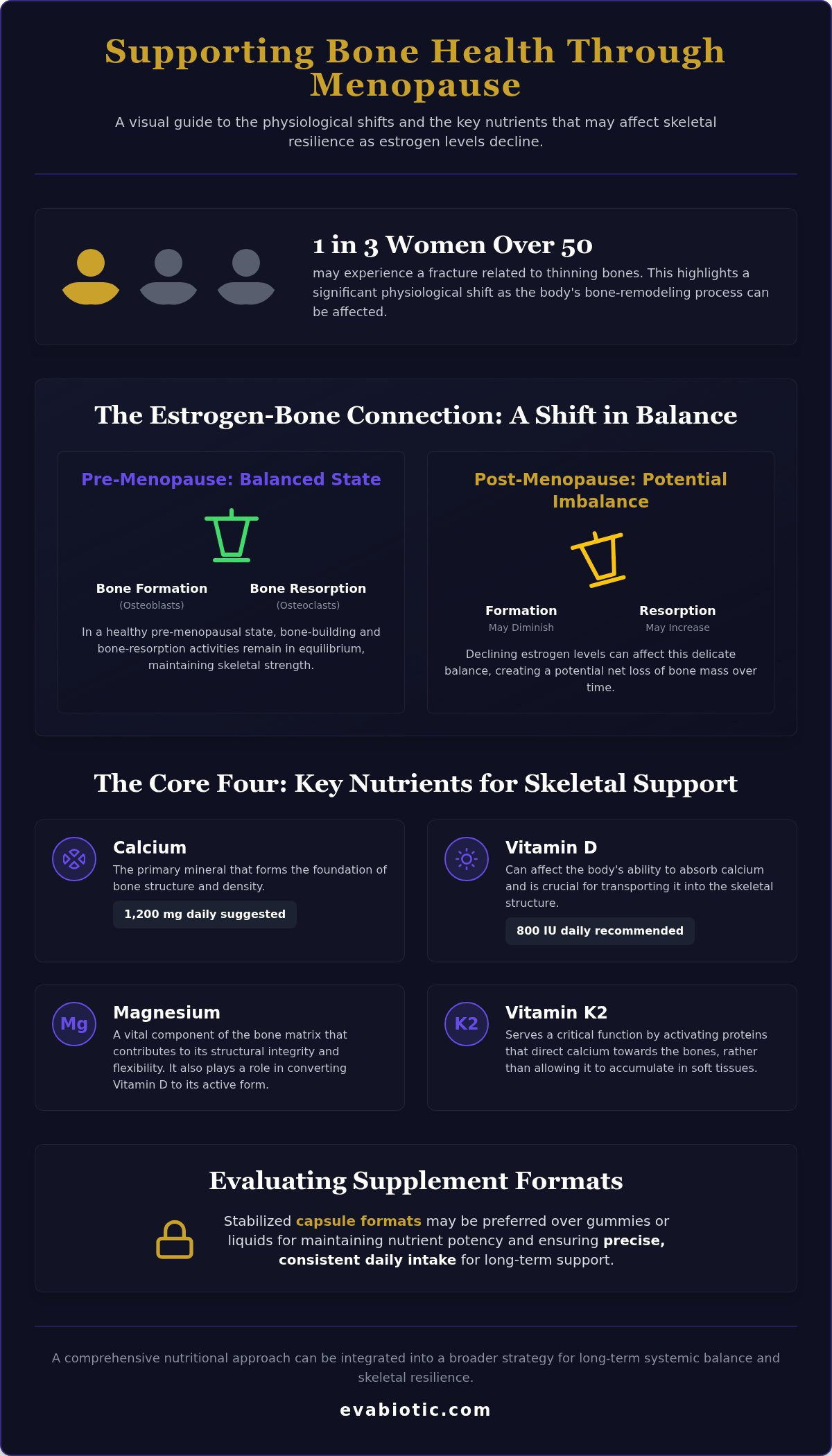
Approximately 1 in 3 women over the age of 50 will experience a fracture due to thinning bones. This data underscores a significant physiological shift that occurs as estrogen levels decline, which can affect the body's natural bone-remodeling process. For many women, this transition introduces a persistent concern regarding height loss and skeletal fragility. Identifying effective supplements for menopause bone health often feels overwhelming because of conflicting clinical advice and inconsistent product standards.
You're likely seeking a clear, evidence-based framework to protect your structural integrity. This article provides a clinical perspective on how targeted nutritional support may help maintain skeletal resilience by addressing the complex estrogen-bone link. We will detail the specific nutrients required for bone density, the physiological reasons behind rapid bone loss, and why a precise, capsule-based delivery system is essential for long-term systemic balance and health maintenance.
Key Takeaways
- Understand the biological mechanism where declining estrogen levels can affect the delicate balance between bone formation and resorption.
- Identify the essential synergy of Calcium, Vitamin D, Magnesium, and Vitamin K2 and how these specific nutrients may support skeletal integrity.
- Learn why stabilized capsule formats are preferred over gummies or liquids for maintaining nutrient potency and ensuring precise daily intake.
- Discover how selecting high-quality supplements for menopause bone health can be integrated into a broader long-term strategy for systemic balance.
- Explore the benefits of a subscription-based nutritional model to ensure you maintain a consistent supply for your skeletal support regimen.
The Physiological Impact of Estrogen Decline on Bone Density
Bone tissue is not a static structure; it's a dynamic organ undergoing a continuous cycle known as bone remodeling. This process relies on a precise balance between two specialized cell types. Osteoclasts are responsible for the resorption of old or damaged bone, while osteoblasts focus on the synthesis and mineralization of new bone matrix. In a healthy pre-menopausal state, these two activities remain in equilibrium, ensuring the skeleton stays strong and adaptive to physical stress.
As a woman enters the menopausal transition, the systemic decline in estrogen can affect this delicate balance. Estrogen functions as a biochemical 'mortar' that helps the body retain minerals within the bone architecture. Without sufficient estrogen, the activity of osteoclasts often increases while the productivity of osteoblasts may diminish. This imbalance creates a net loss of bone mass. Research indicates that the first five years following the final menstrual period are a critical window for skeletal health. During this interval, bone density can decrease at an accelerated rate, making it a vital time to consider targeted supplements for menopause bone health.
Understanding the Estrogen-Bone Connection
Declining estrogen levels can affect the body’s ability to absorb calcium through the intestinal lining. When the digestive system becomes less efficient at processing dietary minerals, the body may prioritize blood calcium levels over skeletal density. This can lead to a physiological shift where calcium is withdrawn from the bones to support other systemic functions. Such a transition can affect the overall mineral content of the skeleton, leading to a gradual decline in bone mineral density that often goes unnoticed until a fracture occurs.
The Long-Term Risk of Osteoporosis
Osteoporosis is defined as a systemic skeletal disease characterized by low bone mass and microarchitectural deterioration of bone tissue. This condition results in increased bone fragility and a higher susceptibility to fractures. Post-menopausal women face a heightened statistical risk compared to men because the rapid loss of estrogen removes a primary driver of bone formation. Developing a strategy for long-term resilience is essential. Utilizing a comprehensive solution like Menopause Relief Multivitamins can affect nutritional status by providing the foundational elements needed for systemic balance.
Essential Nutrients for Menopausal Skeletal Support
Maintaining skeletal integrity after the decline of estrogen requires more than just high-dose minerals. It demands a sophisticated nutritional framework where specific compounds work in concert. The "core four" nutrients, Calcium, Vitamin D, Magnesium, and Vitamin K2, form the foundation of this strategy. While many people focus on individual ingredients, a multivitamin approach can be more efficient because it mirrors the body's natural biochemical pathways. Achieving systemic balance ensures that these nutrients are not just present in the bloodstream, but are actively utilized by the bone matrix. This holistic method can affect the overall efficiency of your skeletal maintenance program.
Calcium and Vitamin D Synergy
Effective calcium utilization is dependent on adequate levels of Vitamin D. Vitamin D functions as a hormonal regulator that can affect the body's ability to absorb calcium from the digestive tract. Current 2026 guidelines suggest postmenopausal women aim for 1,200 mg of calcium daily, ideally consumed in divided doses of 500 to 600 mg to maximize absorption. Simultaneously, the National Institutes of Health recommends 800 IU of Vitamin D to support this process. Using calcium supplements for bone density without sufficient Vitamin D may lead to suboptimal results, as the body cannot effectively transport the mineral into the skeletal structure.
The Role of Magnesium and Vitamin K2
Magnesium is a vital component of the bone mineral itself, contributing to the structural integrity and flexibility of the bone matrix. It also plays a role in converting Vitamin D into its active form. Vitamin K2 serves a distinct but equally critical function by activating proteins that direct calcium specifically toward the bones rather than allowing it to accumulate in the soft tissues or arteries. Vitamin K2 is a critical co-factor for skeletal optimization. This synergistic relationship between minerals and vitamins can affect the long-term resilience of your skeleton. For those seeking a streamlined way to incorporate these elements, Menopause Relief Multivitamins offer a precise ratio of nutrients designed for systemic support. Selecting comprehensive supplements for menopause bone health helps ensure that no individual nutrient is left to work in isolation.
Evaluating Supplement Formats: Why Capsules May Offer Precision
Selecting the right supplements for menopause bone health involves more than just reading a list of ingredients. The physical format of the supplement can affect the stability and potency of the nutrients contained within. Professional-grade capsules provide a controlled environment for sensitive compounds, protecting them from environmental factors like light and moisture. This level of precision is vital for clinical-grade nutritional support—an area where contract formulators like Vita Manufacture focus on strict manufacturing controls—ensuring exact dosages are delivered to maintain systemic balance. Unlike consumer-focused formats designed for flavor, capsules prioritize the biological utility of each ingredient. This ensure that the concentration of active compounds remains consistent from the first dose to the last.
Capsules vs. Gummy and Liquid Formats
Gummy vitamins have gained popularity due to their palatability, but they often present significant drawbacks for skeletal support. Minerals like calcium and magnesium are physically bulky; incorporating them into a gummy matrix in sufficient quantities is often impossible without creating an unmanageably large serving size. Most gummies lack the mineral density required to support bone health effectively. Additionally, gummies frequently rely on high sugar content and artificial binders, which can affect the overall health profile of the supplement. Liquid formats also face challenges, as they often have shorter shelf lives and are more susceptible to oxidation. Evabiotic focuses exclusively on capsules to ensure clinical integrity and avoid the stability issues associated with liquids and gummies.
Ingredient Bioavailability and Absorption
The design of a capsule is engineered to facilitate optimal absorption. High-quality Menopause Relief Multivitamins use capsule shells that are designed to break down at a specific point in the digestive tract. This targeted release can affect how consistently nutrients are delivered to the bloodstream. When a supplement bypasses the early stages of digestion intact, it ensures that sensitive vitamins aren't destroyed by stomach acid before they reach the small intestine. This precise mechanism may lead to a more reliable nutritional outcome over time. By eliminating the fillers and stabilizers found in other formats, capsules provide a cleaner, more direct path for the nutrients your body requires to maintain skeletal resilience. Consistent delivery is a cornerstone of long-term health maintenance.
Developing a Long-Term Nutritional Strategy for Bone Resilience
Maintaining skeletal health is a methodical, multi-year commitment rather than a short-term intervention. Bone tissue cycles slowly; therefore, the cumulative benefits of targeted supplements for menopause bone health are typically observed over years of consistent use. A proactive stance is essential for long-term well-being. Waiting for a clinical event to occur shifts the strategy from maintenance to reactive recovery, which is often more complex and less effective. Systemic resilience is built through daily, disciplined habits that support the body's structural foundation during and after the hormonal transition.
Monitoring Bone Mineral Density (BMD)
Objective data serves as a cornerstone for any professional-grade health strategy. Dual-energy X-ray absorptiometry, commonly known as DEXA scans, provide a precise measurement of bone mineral density. These screenings allow you to monitor changes in your skeletal architecture with high accuracy. Early screening can affect how effectively you and your healthcare provider manage your long-term bone density goals. By establishing a baseline in your early 50s, you can adjust your nutritional intake and lifestyle choices based on verifiable physiological evidence. This data-driven approach removes the ambiguity often found in general wellness advice.
Lifestyle Synergies: Exercise and Diet
Nutrition provides the necessary raw materials, but physical stimulus often determines how those materials are utilized. Weight-bearing exercises, such as walking, hiking, or resistance training, create mechanical stress that can affect the biological signaling for bone formation. Additionally, a protein-rich diet can affect the collagen matrix, which serves as the fundamental "mortar" for mineral deposition. Without adequate protein, the skeletal structure may lack the flexibility needed to resist fractures. Integrating these lifestyle factors creates a synergistic environment for skeletal support. For a comprehensive look at managing these systemic shifts, consult our Menopause Health Optimization: A Clinical Guide.
Consistency in supplementation is frequently the most difficult variable for individuals to control. It's common for gaps in nutritional support to affect the steady-state levels of minerals required for the continuous bone remodeling process. Long-term skeletal integrity relies on a reliable, uninterrupted supply of co-factors like Vitamin K2 and Vitamin D. You can maintain this essential consistency by choosing a subscription-based menopause relief multivitamin. This ensures your skeletal system has uninterrupted access to the clinical support it needs for systemic balance.
Optimizing Bone Health with Evabiotic Menopause Relief Multivitamins
Skeletal resilience requires a bridge between high-level clinical research and the practical realities of daily wellness. While understanding the mechanisms of bone loss is essential, the application of that knowledge depends on a reliable, standardized delivery system. Evabiotic Menopause Relief Multivitamins are designed as a targeted solution for women seeking systemic balance during the menopausal transition. This formulation provides a structured approach to nutritional support, ensuring that the body has access to the co-factors necessary for maintaining skeletal integrity. By focusing on a precision-engineered capsule format, this product avoids the stability issues and fillers often found in mass-market alternatives. Choosing high-quality supplements for menopause bone health can affect your long-term physiological trajectory by providing a consistent foundation for bone remodeling.
Targeted Nutritional Support for Systemic Balance
Menopause is a systemic event that affects multiple physiological pathways simultaneously. The Menopause Relief Multivitamins product page details how this specific blend is formulated to support the body through various symptoms, from hot flashes to sleep disturbances. This comprehensive approach is vital because systemic balance may indirectly support bone health. When the body's overall physiology is optimized, it can more effectively manage the hormonal shifts that otherwise disrupt the bone-remodeling cycle. Addressing the body as a unified system rather than treating bone density in isolation ensures that the nutritional "mortar" remains strong. This integrated strategy can affect the efficiency of mineral absorption and utilization throughout the skeletal structure.
The Subscription Model for Consistency
Bone health maintenance is a long-term investment that requires an uninterrupted supply of essential nutrients. Gaps in supplementation can affect the steady-state levels of vitamins and minerals in the bloodstream, potentially stalling the progress made during consistent periods. Evabiotic addresses this challenge through a subscription model that provides a 60-capsule supply for each 30-day cycle. This structured delivery ensures that you never run out of your daily support, making it easier to stay committed to a multi-year health plan. The convenience of a monthly delivery service removes the cognitive load of reordering, allowing you to focus on your broader lifestyle goals. Evabiotic provides a reliable, US-made source for these nutrients, ensuring that every batch meets rigorous standards for purity and clinical integrity. Consistent access to high-quality supplements for menopause bone health is a cornerstone of a disciplined and effective skeletal resilience strategy.
Securing Your Skeletal Future through Systemic Balance
The menopausal transition represents a pivotal physiological shift that requires a deliberate and scientifically grounded response. We've explored how the decline of estrogen can affect bone remodeling and why a synergistic combination of minerals and vitamins is essential for maintaining structural integrity. Relying on high-quality supplements for menopause bone health provides the foundational support your skeleton needs during this accelerated phase of change. By prioritizing a clinical-grade capsule format over less stable alternatives, you ensure that each nutrient is delivered with precision and potency.
Long-term resilience isn't achieved through sporadic efforts but through the disciplined maintenance of systemic balance. Our monthly subscription model is designed to prevent nutritional gaps, providing a reliable, US-made source of support that arrives exactly when you need it. You're making an informed, rational decision for your long-term health. Support your skeletal resilience with Evabiotic Menopause Relief Multivitamins. Taking a proactive stance today may affect your mobility and strength for years to come.
Frequently Asked Questions
Why does bone loss accelerate specifically during menopause?
Bone loss accelerates because the decline in estrogen levels can affect the body's natural bone-remodeling cycle. Estrogen typically helps to regulate osteoclast activity, which is the process of breaking down bone tissue. When these levels drop, the balance between bone resorption and new bone formation is disrupted. This physiological shift often results in a rapid decrease in bone mineral density, particularly during the first five years following the final menstrual period.
Can I get enough calcium for bone health from my diet alone?
While it is possible to obtain calcium from a diet rich in dairy, leafy greens, and fortified foods, many women find it challenging to reach the recommended 1,200 mg daily. Intestinal absorption efficiency can affect how much of that dietary calcium actually reaches the skeleton. Using targeted supplements for menopause bone health can fill these nutritional gaps. This ensures a consistent supply of the minerals required for systemic balance and long-term skeletal resilience.
How much Vitamin D is recommended for women in menopause?
According to current 2026 guidelines from the National Institutes of Health, postmenopausal women should aim for a daily intake of 800 IU of Vitamin D. This nutrient is essential because it can affect the body's ability to absorb calcium from the digestive tract. Without adequate Vitamin D, even a high-calcium diet may result in suboptimal bone density. Consistent daily intake is necessary to maintain the systemic levels required for effective bone mineralization.
Is it better to take bone health supplements in the morning or evening?
Timing depends on the specific formulation, but consistency is the most critical factor for success. For calcium, it is generally advised to consume doses of 500 to 600 mg at a time for optimal absorption. Splitting your intake between the morning and evening can affect how efficiently your body utilizes these minerals. Taking capsules with a meal may also enhance the absorption of fat-soluble vitamins like Vitamin D and Vitamin K2.
How long does it take for supplements to affect bone density?
Bone tissue is slow to remodel, so changes in density are typically measured in months or years rather than weeks. Consistent nutritional support can affect the skeletal landscape over a long-term horizon. Most clinical evaluations, such as DEXA scans, are performed every one to two years to monitor these gradual shifts. Maintaining a steady supply of nutrients through a subscription model helps ensure there are no gaps in this slow-moving physiological process.
Are there any side effects to taking menopause bone health multivitamins?
Most women tolerate high-quality capsule-based multivitamins well, though some may experience minor digestive adjustments. Ingredients like calcium can affect bowel regularity in certain individuals. Choosing a professional-grade capsule rather than a gummy format can minimize the intake of unnecessary sugars and fillers that often cause sensitivities. It is always appropriate to consult with a healthcare provider to ensure any new supplement aligns with your specific physiological profile and existing medications.
What is the difference between calcium carbonate and calcium citrate?
Calcium carbonate is a concentrated form that requires stomach acid for breakdown, so it should be taken with food for maximum utility. Calcium citrate is more easily absorbed on an empty stomach and may be preferable for those with lower stomach acid levels. Both forms can affect bone mineral density when used correctly. The choice often depends on individual digestive comfort and the specific clinical needs of the user seeking systemic balance during the menopausal transition.
Can weight-bearing exercise replace the need for bone health supplements?
Weight-bearing exercise provides the mechanical stimulus for bone formation, but it cannot replace the raw materials required for the process. While physical activity can affect bone strength, the body still needs a consistent supply of calcium, Vitamin D, and Magnesium to build the bone matrix. A multi-faceted strategy that combines regular exercise with precise supplements for menopause bone health is the most effective way to maintain skeletal integrity and long-term resilience.
Disclaimer
*These statements have not been evaluated by the Food and Drug Administration. This product is not intended to diagnose, treat, cure or prevent any disease. The views and nutritional advice expressed by AlphaHealth+ Nutrition are not intended for the purpose of providing medical advice. Please always consult your health care provider if you are taking any medications or have any medical conditions. Individual results may vary.